
A complete guide to permanent tooth replacement from the board-certified oral surgeons at Galleria Oral & Maxillofacial Surgery in Roseville, CA — serving Rocklin, Granite Bay, Folsom, Lincoln, El Dorado Hills, and the greater Sacramento region.
Every mouth is different. This guide is general education — a consultation with 3D imaging is the only way to know which option fits your anatomy, health, and goals.
What if your missing teeth were stealing more than just your smile? For many people, the real cost of tooth loss isn't the gap in a photo — it's quietly giving up favorite foods, and the nagging anxiety of eating or laughing in public. Add wildly different price quotes and layers of medical jargon, and a permanent solution can feel out of reach.
This guide walks through the types of permanent dental implants available in 2026 — from single-tooth restorations to full-arch All-on-4 systems — and gives you a practical framework for comparing them on cost, longevity, and lifestyle, so you can move from uncertainty to informed confidence.
Key Takeaways
- Permanent tooth replacement isn't just cosmetic — implants prevent the long-term jawbone loss that follows every extraction.
- The main options are single-tooth implants, implant-supported bridges, and full-arch fixed systems like All-on-4 — each fits a different situation.
- The smart comparison is long-term value: initial cost versus 20-year durability and chewing function, not just the sticker price.
- Vet providers on board-certified surgical expertise, in-house 3D imaging, and transparent, itemized treatment plans.
- Many patients qualify for "Teeth in a Day" — implants placed and a functional set of teeth attached in a single, comfort-focused visit.
Why Permanent Tooth Replacement Is a Health Necessity in 2026
Losing a tooth is much more than a cosmetic inconvenience — it starts a quiet biological countdown. A permanent replacement is designed to stay in your mouth around the clock and function exactly like the teeth you were born with. Unlike traditional dentures that sit on top of the gums, modern implant restorations integrate directly into your jawbone, providing a foundation that is both stable and protective.
The Biological Impact of Missing Teeth
Your jawbone stays dense because tooth roots stimulate it every time you chew. When a tooth is lost, that stimulation stops and the bone in that area begins to resorb — shrinking measurably within the first year and continuing for decades. This is why long-time denture wearers develop a sunken facial appearance, and why dentures that fit well at first grow loose over time.
A titanium implant is the only replacement that restores this stimulation. The implant fuses with the bone through a process called osseointegration, and the bone responds to chewing forces the way it did with a natural root. Neighboring teeth also benefit: they no longer drift into the gap, and unlike a traditional bridge, an implant doesn't require grinding down healthy adjacent teeth for support.
The Hierarchy of Modern Tooth Replacement Options
Single-Tooth Implants
The gold standard for replacing one missing tooth: a titanium post in the bone, a connector called an abutment, and a custom crown matched to your surrounding teeth. It looks, feels, and cleans like a natural tooth — regular brushing and flossing, no special routines — and it never decays.
Implant-Supported Bridges
When several teeth in a row are missing, you don't need an implant for every tooth. Two implants can anchor a bridge of three or four teeth, restoring the whole span with fewer surgical sites and lower cost than individual implants for each tooth.
Full-Arch Fixed Systems (All-on-4)
When most or all of the teeth in an arch are failing or gone, All-on-4 replaces the entire arch with a fixed bridge anchored on just four strategically angled implants. The back implants are tilted to maximize the use of available bone — which is why many patients with bone loss qualify without extensive grafting. The result is permanently attached: it doesn't come out at night, and it restores close to 90% of natural chewing power.
Implant-Retained Overdentures
A middle option: a removable denture that snaps onto two to four implants. It's far more stable than a traditional denture and less costly than a fixed arch, though it still comes out for cleaning and doesn't match the chewing power of a fixed system. For many patients it's a meaningful upgrade; for others it's a stepping stone to All-on-4.
The Framework for Choosing: Cost, Longevity, and Lifestyle
The most common mistake is comparing options on sticker price alone. A traditional denture is the cheapest up front and the most expensive over 20 years — it needs relines and replacements as the bone shrinks beneath it, and the bone loss itself makes every future option harder.
- Cost: think in decades, not invoices. The implant post is designed to last a lifetime; the visible crown or bridge typically serves 15–20 years before normal wear calls for replacement. Our full-arch cost guide breaks down real numbers.
- Longevity: implants don't decay, but they do depend on healthy gums. Good hygiene and regular checkups are the whole maintenance plan.
- Lifestyle: if you want to bite into an apple, eat steak, and never think about adhesives, a fixed solution is the answer. If budget is the constraint, an overdenture beats a traditional denture in stability by a wide margin.
Navigating the Northern California Market: Vetting and Financing
Implant dentistry is a crowded market, and quality varies more than advertising suggests. What to look for:
- Board-certified surgical expertise. Placement by an oral and maxillofacial surgeon — with hospital-based surgical residency and formal anesthesia training — matters most in complex cases and full-arch work.
- 3D imaging on site. Cone beam CT scanning is the difference between guessing at your bone and knowing it.
- Transparent, itemized treatment plans. You should see exactly what the surgery, components, and final teeth cost — in writing, before you commit. See how we compare in Galleria vs. the implant chains.
- Financing options. Many PPO plans partially cover implant treatment, and flexible financing like CareCredit can spread the remainder — details on our costs and financing page.
The Galleria Experience: Same-Day Transformation
At Galleria Oral & Maxillofacial Surgery in Roseville, many patients qualify for "Teeth in a Day" — a digital workflow where 3D imaging, precision surgical guides, and on-site coordination let our surgeons remove failing teeth, place implants, and attach a functional set of teeth in a single comfort-focused visit under IV sedation. You walk in with a failing smile and walk out the same day with a fixed one.
Frequently Asked Questions
Can I get permanent teeth in one day?
Yes — many patients are eligible for "Teeth in a Day." Using advanced 3D imaging and precision planning, our board-certified surgeons can place implants and attach a functional set of teeth in a single visit. It's an excellent option for patients transitioning from failing teeth or traditional dentures.
Am I a candidate if I have bone loss?
Significant bone loss doesn't automatically disqualify you. Techniques like All-on-4 use tilted implants to maximize available bone, often bypassing extensive grafting. Even if you've been told "no" in the past, a 3D CT evaluation may reveal a path forward.
What's the difference between All-on-4 and traditional dentures?
Stability and long-term health. Dentures sit on the gums, can slip or click, and don't stop jawbone shrinkage. All-on-4 is permanently attached to four implants, restores nearly 90% of natural chewing power, and keeps the jawbone stimulated and healthy.
Is dental implant surgery painful?
Most patients report it's far more comfortable than they expected. IV sedation keeps you deeply relaxed throughout, and because our surgeons use minimally invasive digital guides, recovery is typically faster and less painful than traditional methods.
How long do permanent dental implants last?
Placed by a board-certified surgeon and maintained with good hygiene, the implant post is designed to last a lifetime. The visible crown or bridge may need replacement after 15–20 years of normal wear. Implants themselves never decay.
Does insurance cover permanent tooth replacement?
Many PPO plans in 2026 partially cover the surgical and restorative phases, typically as a major procedure up to your annual maximum. Our team helps you navigate benefits, provides transparent cost breakdowns before you begin, and offers flexible financing like CareCredit — see implant financing options.
Start With an Answer, Not a Sales Pitch
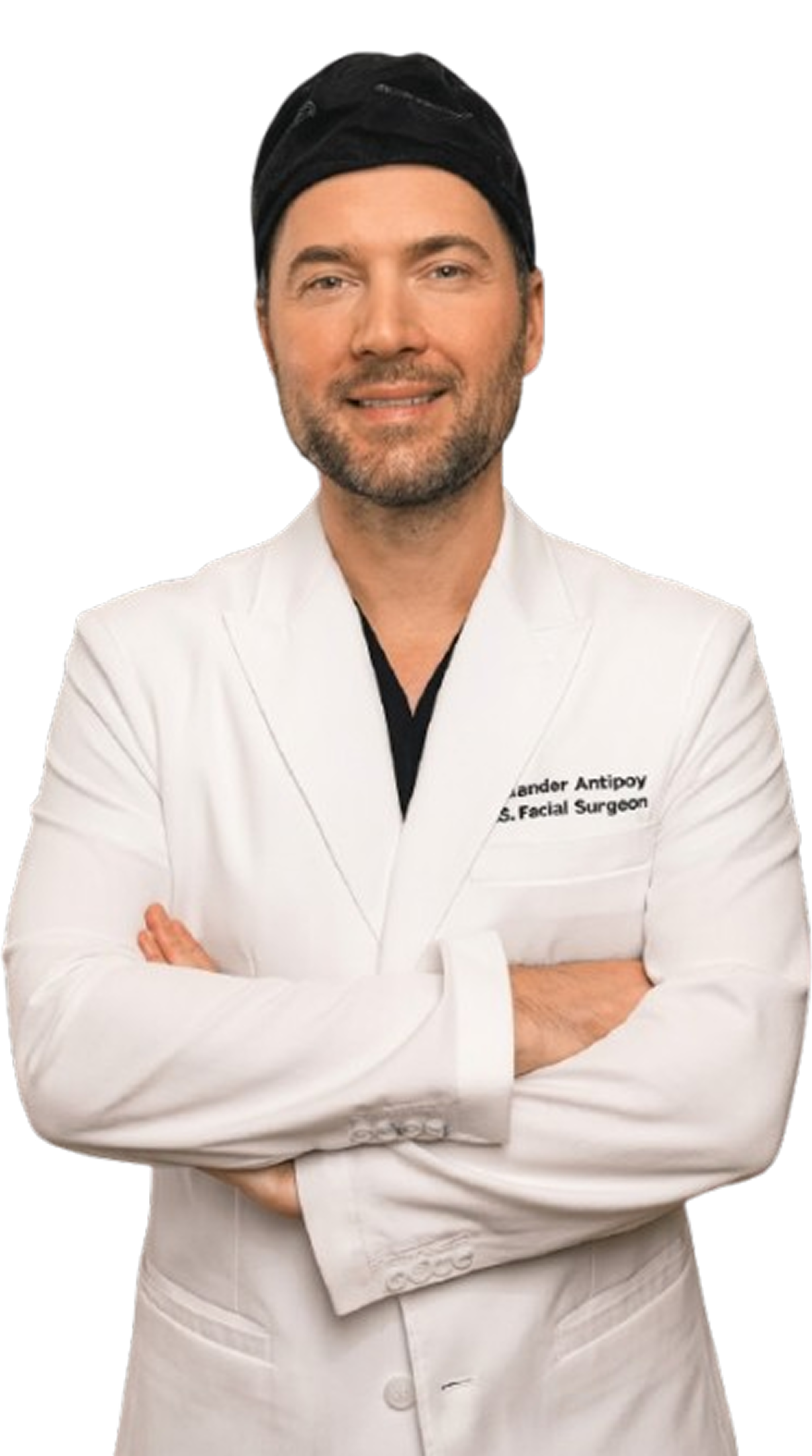
Dr. Alexander Antipov and Dr. André-David Kahwach evaluate every dental implant case with 3D imaging and give you a written, itemized plan — including which option genuinely fits your anatomy and budget.
Call (916) 783-2110 or schedule a consultation.
911 Reserve Drive, Suite 150, Roseville, CA 95678.