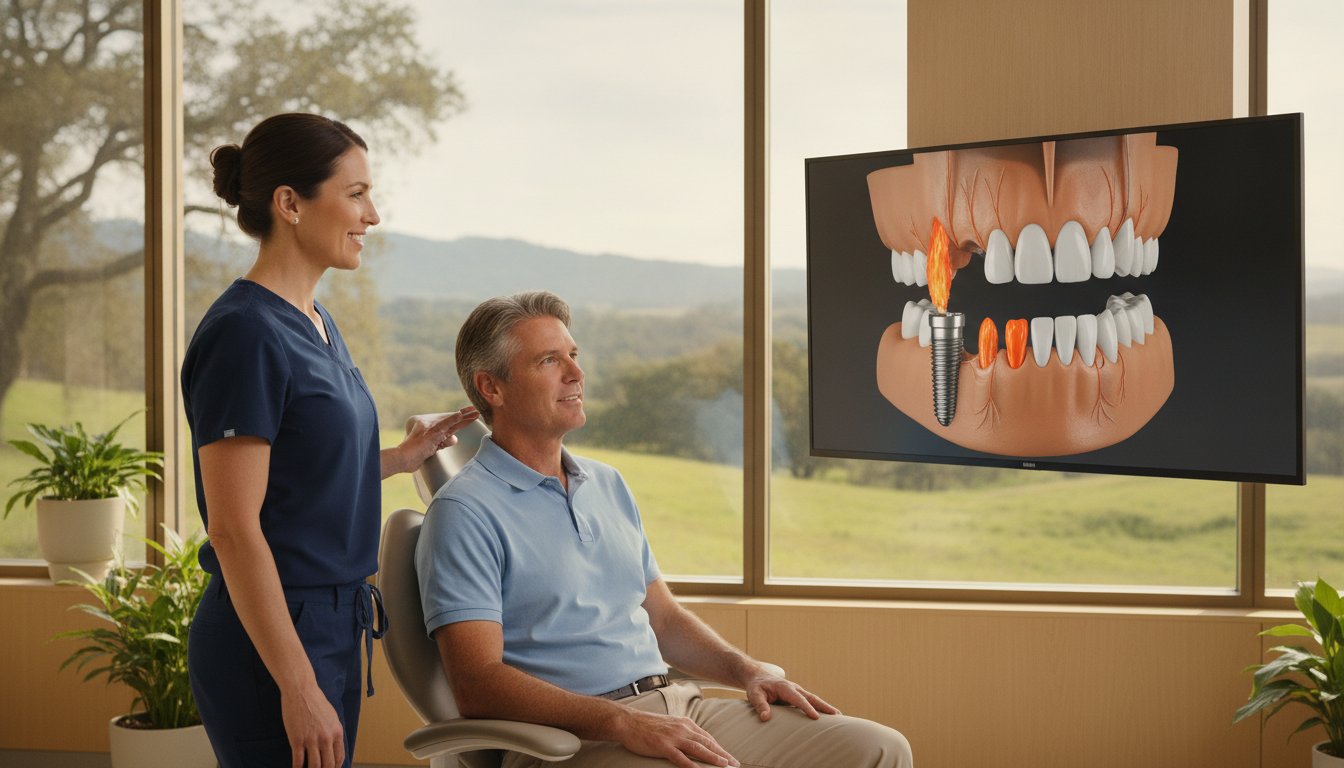
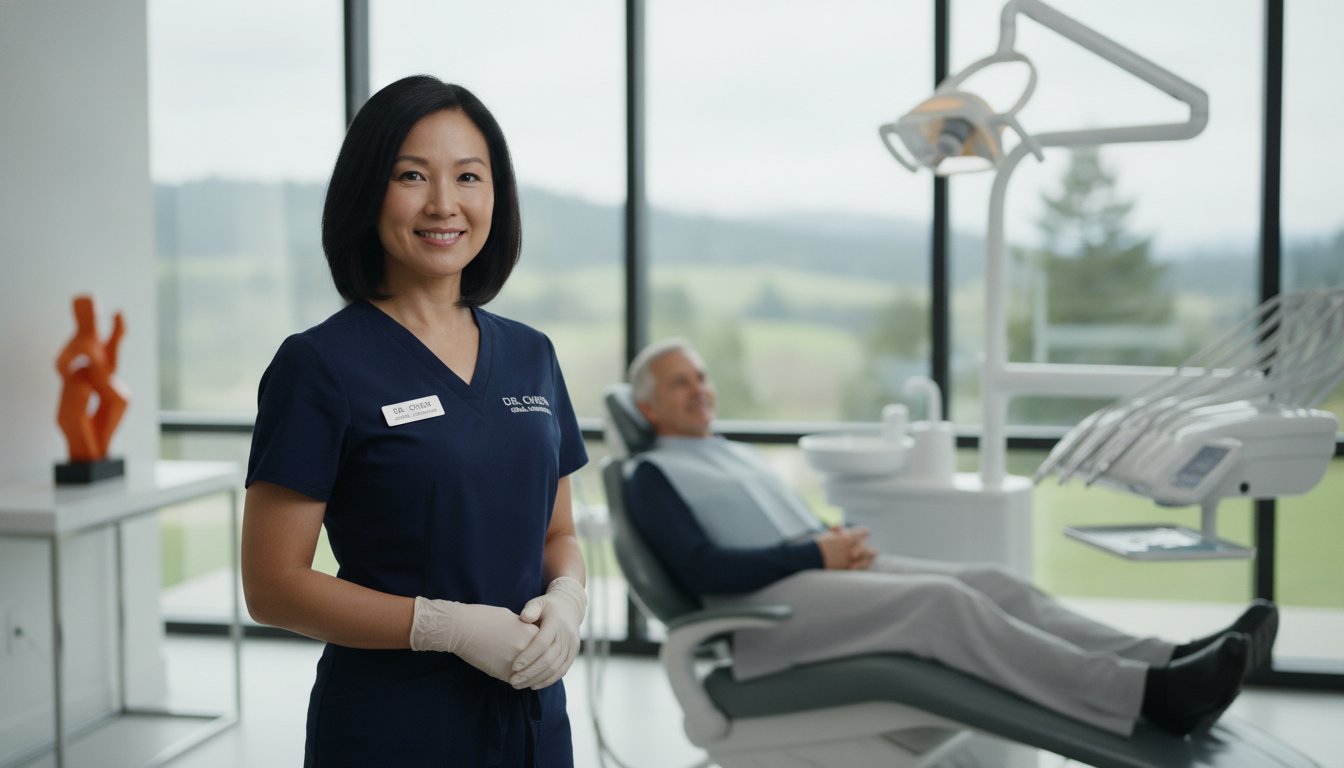
Galleria Oral & Maxillofacial Surgery in Roseville, CA is a specialist-led surgical practice where board-certified oral and maxillofacial surgeons perform every implant procedure — serving Placer County and the greater Sacramento region.
Credentials, candidacy, and costs vary by provider and by individual case; the information below is general education, not medical advice. Please consult a qualified oral surgeon for a personalized evaluation.
Would you trust a family doctor to perform complex heart surgery just because they have a medical license? Most people wouldn't — yet many patients across the state unknowingly take a similar risk with their smiles by choosing a general dentist for surgical procedures. It's completely understandable to feel overwhelmed by the options and anxious about the significant cost of restoration. You want a permanent, natural-looking result, and you deserve the peace of mind that comes from knowing your surgeon can handle any complication that arises.
Finding a board certified dental implant surgeon California residents can trust is the single most important step in protecting your health and your financial investment. This guide will show you why board certification is the critical factor in surgical success and how to distinguish top-tier specialists from high-volume dental mills. We'll break down the specific educational requirements of oral surgeons, explain the value-to-price ratio of specialized care, and give you the tools to choose a provider who prioritizes your long-term result.
Key Takeaways
- Learn why ABOMS board certification is the gold standard for surgical safety and clinical excellence in dental restorations.
- Discover how to identify a board certified dental implant surgeon California patients can rely on for complex full-arch or All-on-4 procedures.
- Understand the hidden risks of "bargain" implants and how specialized expertise prevents costly long-term complications.
- Get a practical checklist of questions to ask at your consultation — from diplomate status to case volume and anesthesia credentials.
- See why local, surgeon-owned practices offer accountability that corporate implant chains can't match.
What Defines a Board Certified Dental Implant Surgeon in California?
Understanding the credentials of your provider is the first step toward a successful restoration. Every oral surgeon begins their journey as a dentist, but the path diverges sharply after dental school. While a general dentist focuses on broad oral health, a board certified surgeon has undergone extensive, specialized training. Board certification represents a voluntary commitment to the highest standard of care, requiring years of additional peer review and testing — it is the pinnacle of surgical validation in the dental field.
These specialists focus their entire careers on complex procedures like dental implantology, advanced bone grafting, and the safe administration of IV sedation. This level of focus ensures they aren't just performing implants between standard fillings; they're mastering the biological and structural nuances of the jaw to ensure long-term reliability.
The Difference Between General Dentistry and Oral Surgery
The educational gap between a general dentist and an oral surgeon is vast. After passing the National Board Dental Examination and completing four years of dental school, an oral and maxillofacial surgeon enters a rigorous four to six year hospital-based residency. This residency involves training alongside medical residents in internal medicine, general surgery, and anesthesiology. This background is vital for managing complications, such as significant bone loss or nerve proximity, which often intimidate less experienced practitioners. You're not just paying for the implant; you're paying for the years of hospital-based experience that ensure a safe, predictable outcome.
Why "Implant Training" Isn't the Same as Board Certification
You might see certificates on an office wall claiming "Advanced Implant Training," but don't confuse these with true board certification. Many general practitioners take weekend courses to learn basic implant placement. While these provide a certificate of completion, they don't grant diplomate status. To become board-certified, a surgeon must pass a grueling series of written and oral exams conducted by the American Board of Oral and Maxillofacial Surgery (ABOMS). You can verify a surgeon's status through the ABOMS website or the Dental Board of California to ensure you're in the hands of a seasoned expert.
| Credential | General Dentist with Implant Training | Board-Certified Oral Surgeon (ABOMS) |
|---|---|---|
| Surgical training | Weekend or short-course certificates | 4–6 year hospital-based surgical residency |
| Anesthesia | Typically local anesthetic only | Licensed for IV sedation with continuous monitoring |
| Complex cases | Refers out bone loss, sinus, and revision cases | Bone grafting, sinus lifts, zygomatic implants, revisions |
| Verification | Course completion certificates | Peer-reviewed ABOMS written and oral board exams |
| Case volume | A few implants per month | Surgery is the entire practice, every day |
The ABOMS Standard: Why It Matters for Your Procedure
The American Board of Oral and Maxillofacial Surgery (ABOMS) serves as the gold standard for surgical excellence in the United States. While basic licensure ensures a minimum level of competency, certification from this board requires a surgeon to demonstrate mastery through a grueling two-part process. The journey begins with a Qualifying Examination that tests foundational knowledge, followed by a high-stakes oral Certifying Examination. It's a level of scrutiny that few dental professionals undergo, providing the ultimate assurance that your surgeon is equipped for the complexities of modern implantology.
Board certification also carries an ongoing obligation: diplomates must maintain their status through continuing education and periodic recertification, which keeps them current with evolving surgical techniques, materials, and safety protocols. When you choose an ABOMS diplomate, you're choosing a surgeon whose skills have been tested by their peers — not just once, but throughout their career.
Managing Complex Cases: Bone Loss and Revisions
Board-certified surgeons are often the primary choice for "revision" cases, which involve fixing implants that were placed incorrectly by less experienced providers. They specialize in advanced techniques like sinus lifts and zygomatic implants that allow for successful restoration even in patients with severe bone loss. By integrating 3D imaging and digital surgical guides, these experts ensure that every implant is placed with sub-millimeter precision. This level of detail is what prevents long-term complications and ensures your new smile is built on a stable, healthy foundation.
The Risks of Choosing "Bargain" Implants Over Expertise
It is tempting to look for the lowest price when facing a major medical expense. However, the misconception that all dental implants are created equal can lead to devastating clinical and financial consequences. While many clinics advertise "bargain" prices, these often come at the expense of surgical precision and material quality. When an implant is placed without expert consideration for bone density and gum tissue, the risk of peri-implantitis increases significantly. This inflammatory condition leads to bone loss around the implant and is the leading cause of implant failure.
Aesthetic risks are equally concerning. Non-specialists may lack the training to manage thin gum biotypes, resulting in the "gray line" where the metal of the implant shows through the tissue. Achieving a natural, life-changing smile requires more than just "screwing in a post"; it requires deep knowledge of how the body integrates with medical-grade materials. If you're weighing your options, our comparison of Galleria vs. corporate implant chains breaks down what to look for.
Hidden Costs of Non-Specialist Care
The true price of a "cheap" implant often isn't revealed until months after the procedure. Non-specialists frequently miss the subtle signs that a patient requires bone grafting, leading to implants that eventually become loose or fail entirely. You may face these hidden burdens:
- Revision surgery: Correcting a poorly angled implant is far more complex and expensive than a primary placement.
- Material quality: Bargain clinics may use cheaper titanium alloys rather than high-quality medical-grade titanium that promotes better bone integration.
- Additional grafting fees: Costs can spiral when a surgeon has to fix bone loss caused by an initial failed attempt.
Myth-Busting: "My Regular Dentist Says They Can Do It"
Many patients feel a strong sense of loyalty to their general dentist, but it's vital to distinguish between "can do" and "specialize in." A dentist who performs a few implants a month simply cannot match the clinical volume or specialized training of an oral surgeon. Surgery is a specialty, not a side-service. Beyond the surgery itself, board-certified specialists are uniquely equipped to provide deep IV sedation and continuous anesthesia monitoring. This ensures your safety and comfort during the entire process — a level of care that goes far beyond what a standard dental office is typically prepared to handle. Don't let a sense of loyalty compromise your surgical outcome or your safety.
Evaluating Implant Specialists in Northern California
Finding the right specialist requires looking beyond a polished website. In Northern California — particularly around Roseville, Sacramento, and El Dorado Hills — patients have access to world-class specialists, but the sheer volume of options can be paralyzing. Your research should begin with verifying credentials and end with a visit to the facility to see how the team operates. Modern practices pair the surgeon with advanced on-site technology like 3D CT imaging, which enables same-day implant procedures where the planning, surgery, and temporary tooth all happen under one roof.
When you review a practice's "before and after" gallery, look for aesthetic consistency. You want to see that the teeth look natural and fit the patient's facial structure, not just a one-size-fits-all solution. High-quality galleries show a variety of cases, from single tooth replacements to full-arch restorations, demonstrating the surgeon's versatility and artistic eye. Seeing a consistent track record of success helps alleviate the fear of a "botched" procedure.
Questions to Ask Your Surgeon
During your initial consultation, don't be afraid to interview the doctor. A seasoned expert welcomes these questions because they demonstrate your commitment to a successful outcome. Ensure you ask:
- Are you a Diplomate of the ABOMS? This confirms they've met the rigorous standards of the American Board of Oral and Maxillofacial Surgery.
- How many full-arch All-on-4 procedures have you performed? Experience in high-volume, complex cases is a strong indicator of proficiency.
- Do you handle the entire process, including the prosthetic, in one location? Single-site care reduces the risk of communication breakdowns between different offices.
- Who administers and monitors the anesthesia? Oral surgeons are trained and licensed to provide IV sedation with continuous monitoring.
The Value of Local Expertise in Roseville and Sacramento
Choosing a local specialist in the Roseville or Sacramento area isn't just about convenience; it's about the security of long-term maintenance. Major restorative work requires follow-up appointments to ensure the implants are healing correctly and the prosthetic remains comfortable. Local surgeons rely heavily on their community reputation, which means they're deeply invested in your personal success. A board-certified surgeon who lives and works in your community offers a level of accountability that corporate "implant mills" simply can't match.
The Galleria Standard: Board Certified Care in Roseville
Galleria Oral & Maxillofacial Surgery brings elite surgical standards to the heart of Northern California. Our practice is led by board-certified oral and maxillofacial surgeons who live and work in the communities they serve, from Roseville and Sacramento to El Dorado Hills. This isn't a corporate franchise; it's a patient-centered surgical practice where technical mastery meets genuine compassion. Every implant case begins with a high-resolution 3D CT scan and ends with a transparent, itemized treatment plan — every fee spelled out in writing before you commit.
We also believe elite care should be financially accessible. Our team offers flexible financing options and works closely with your insurance provider to maximize your benefits. For a personalized estimate, try our cost calculator, or schedule a consultation to meet our surgical team in person.
Frequently Asked Questions
What's the difference between a periodontist and an oral surgeon for implants?
Both are specialists, but they have different areas of focus. Periodontists specialize in gum health and the supporting structures of teeth. Oral surgeons undergo four to six years of additional hospital-based surgical residency, focusing on bone grafting, complex jaw reconstruction, and anesthesia. For full-arch restorations or cases involving significant bone loss, the advanced surgical training of an oral surgeon is often preferred to ensure the most predictable and safe outcome.
What is the success rate of dental implants when performed by a board-certified surgeon?
Long-term clinical studies show that dental implants have a success rate between 95% and 98% over a 5 to 10 year period. When you choose a board-certified specialist, you minimize the risk of common complications like improper placement or infection. These experts use advanced 3D imaging and precise surgical protocols to ensure the implant integrates perfectly with your bone, providing a foundation that can last a lifetime.
Can a general dentist legally perform dental implant surgery in California?
Yes, any licensed dentist in California can legally perform dental implant surgery. However, there is a significant difference between being legally allowed to do a procedure and being a specialist in it. General dentists often take short weekend courses to learn implant placement. In contrast, a board-certified oral surgeon has dedicated years to surgical residency and passed peer-reviewed exams to prove their mastery of complex oral surgery.
What happens if a dental implant fails, and can it be fixed?
A failed implant can usually be fixed through a process called revision surgery. This involves removing the failing implant, cleaning the area to resolve infections like peri-implantitis, and often performing a bone graft to rebuild the foundation. Once the site has healed and the bone is strong enough, a new implant can be placed. Board-certified surgeons specialize in these complex revision cases, restoring health even after a previous procedure has failed.
How much more does a board-certified specialist cost compared to a general dentist?
Specialists may have higher initial fees due to their advanced training and the sophisticated technology they use. However, this investment often saves you money by preventing the high costs of revision surgery or implant failure. At Galleria, every patient receives a transparent, itemized treatment plan and access to flexible financing, so you know exactly what your care costs before committing — with no surprises later.
Does insurance cover dental implants performed by an oral surgeon?
Most dental insurance plans provide some coverage for implants, typically ranging from $1,000 to $2,000 in annual maximum benefits. Insurance companies generally don't distinguish between a general dentist and an oral surgeon when applying these benefits. While coverage rarely pays for the entire procedure, our team works closely with your provider to maximize your benefits, and flexible financing can help cover any remaining costs.
What is the recovery time for All-on-4 surgery with a specialist?
Most patients return to work or light activities within 2 to 3 days after an All-on-4 procedure. While you'll leave our office with a functional set of temporary teeth the same day, your jawbone needs about 3 to 6 months to fully fuse with the implants. During this time, you'll follow a soft-food diet to protect the healing process. Advanced surgical techniques and IV sedation help minimize swelling and discomfort, ensuring a smoother journey to your permanent smile.
Ready to put your care in board-certified hands? Schedule your consultation at our Roseville surgical center and see the difference specialist-led care makes.