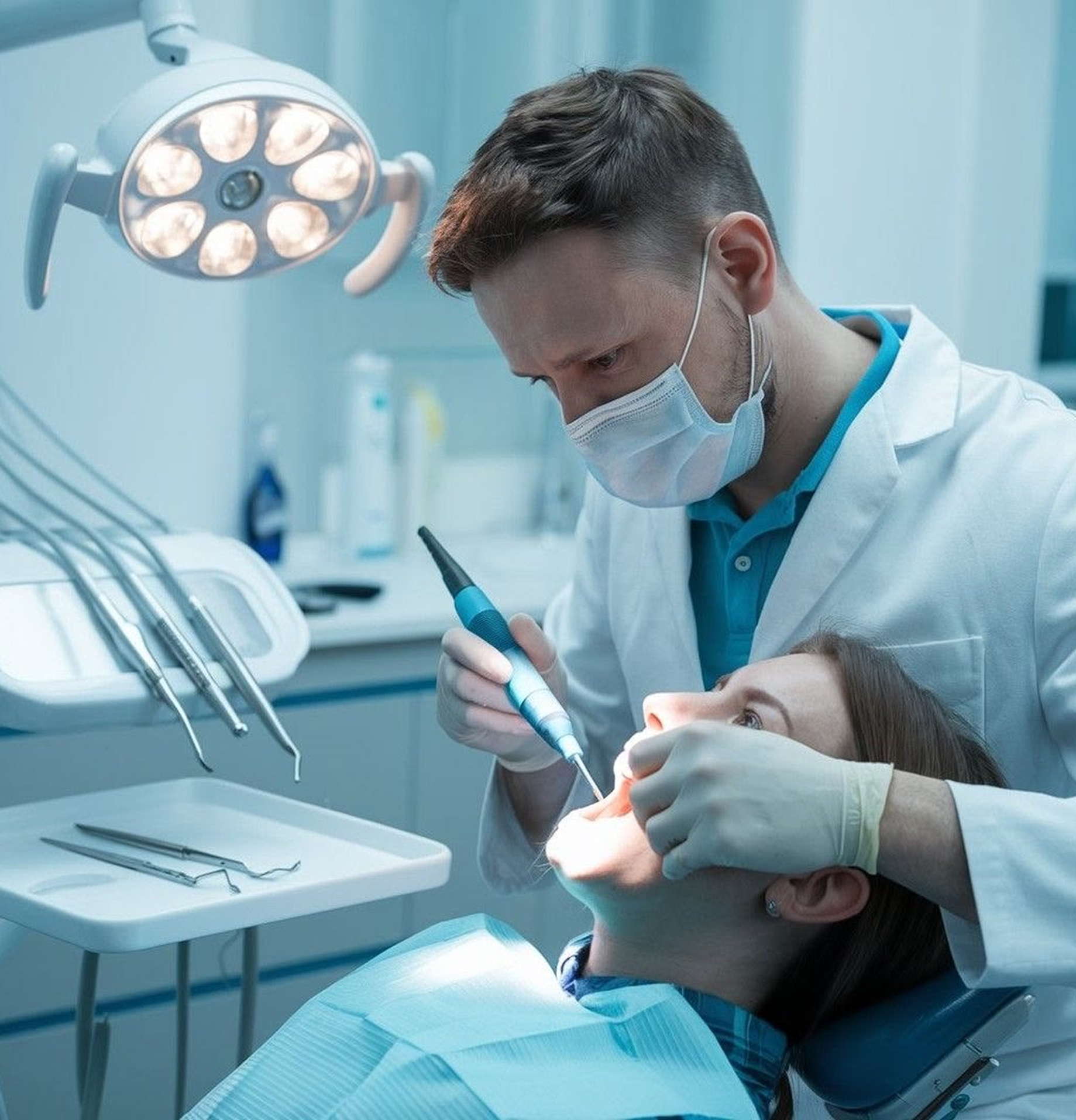

Galleria Oral & Maxillofacial Surgery in Roseville, CA sees post-operative concerns promptly — including patients who had surgery elsewhere — serving Placer County and the greater Sacramento region.
Symptoms and treatment vary by individual; the information below is general education, not medical advice. If you're in pain after an extraction, call your oral surgeon.
Dry socket is the complication patients hear about most and understand least. It's not an infection, it isn't dangerous, and it doesn't mean your surgery went badly — but it is genuinely painful, and it's largely preventable.
Here's what actually causes it, how to recognize it, and what to do if it happens.
What Is Dry Socket?
The clinical name is alveolar osteitis. After a tooth is removed, a blood clot forms in the empty socket. That clot is the foundation of healing: it protects the exposed bone and nerve endings underneath while new tissue develops.
Dry socket occurs when that clot dislodges, dissolves, or never forms properly, leaving bone exposed to air, food, and fluids. The result is a deep, persistent ache that over-the-counter medication barely touches.
It affects a minority of extraction patients overall, but it's more common after removal of impacted lower wisdom teeth than after any other extraction.
Symptoms of Dry Socket
Dry socket typically appears three to five days after surgery — which is what makes it recognizable. Normal recovery pain steadily improves after day two or three. Dry socket pain does the opposite.
Watch for:
- Severe, throbbing pain that starts several days after surgery, after you'd already begun feeling better
- Pain radiating to the ear, eye, temple, or neck on the same side
- A visibly empty-looking socket — you may see whitish bone where a dark clot should be
- Bad breath or a foul taste in your mouth
- Pain that isn't controlled by the medication that was working fine two days earlier
Notably, dry socket usually does not cause fever, pus, or significant swelling. Those symptoms point toward infection instead, which is treated differently.
What Causes It
The clot is fragile for the first several days. These are the things that disrupt it:
Suction. Drinking through a straw creates negative pressure inside the mouth that can pull the clot straight out of the socket. So can vigorous spitting, forceful rinsing, and sucking on candy.
Smoking and vaping. This is the biggest single risk factor, and it works two ways. The suction of inhaling disturbs the clot mechanically, and nicotine constricts blood vessels, reducing the blood supply the socket needs to heal. Studies have consistently found substantially higher dry socket rates in smokers.
Difficult or traumatic extractions. Deeply impacted lower molars requiring bone removal carry a higher baseline risk simply because of the surgical complexity involved.
Poor oral hygiene or existing infection. Bacteria in the area, including active pericoronitis at the time of surgery, increase risk.
Oral contraceptives and hormonal fluctuation. Elevated estrogen levels appear to affect clot stability. Some surgeons schedule extractions during the last week of the pill cycle for this reason.
Previous dry socket. If you've had one before, you're more likely to have another.
How to Prevent Dry Socket
Prevention comes down to protecting the clot for roughly the first week. Our post-operative instructions after wisdom tooth removal cover this in detail, but the essentials are:
For the first 24 hours:
- No straws, no smoking, no vaping, no spitting
- No rinsing or swishing at all
- Bite on gauze as directed and keep firm, steady pressure
- Stick to cool, soft foods
- Rest — keep your heart rate down
Days 2 through 7:
- Begin gentle warm salt water rinses (about half a teaspoon of salt per cup of water), letting the water fall out rather than spitting
- Continue avoiding straws and all tobacco and nicotine products
- Avoid crunchy, seedy, or small-particle foods — chips, nuts, popcorn, rice, granola
- Brush your other teeth normally, staying gentle near the sites
- Skip carbonated drinks and alcohol
On smoking specifically: the ideal is to stop for two weeks. If that isn't realistic, 72 hours is the minimum, and even then the risk stays elevated. If you use nicotine, tell your surgeon before surgery so the extraction technique and post-op plan can account for it.
What Dry Socket Treatment Looks Like
Dry socket is treated in the office, and relief is usually rapid.
Your oral surgeon will gently irrigate the socket to flush out debris, then place a medicated dressing — typically a small strip of material containing eugenol and an anesthetic agent — directly into the socket. Most patients feel meaningful relief within minutes.
The dressing may be changed every one to three days over the following week until the pain resolves and healing tissue fills in. Depending on your case, your surgeon may also recommend anti-inflammatory medication or, less commonly, antibiotics if infection is also present.
What doesn't work: waiting it out. Untreated dry socket can stay painful for a week or more. There's no home remedy that replaces professional treatment, and clove oil applied directly by patients frequently causes chemical burns to the surrounding tissue.
Call your surgeon rather than self-treating. The visit is short, and there's no reason to spend days in avoidable pain.
How Long Does Dry Socket Last?
With treatment, most patients are comfortable within 24 to 72 hours and fully resolved in about a week. Without treatment, symptoms can persist for seven to ten days as the socket slowly heals on its own.
Dry socket does not cause permanent damage. It delays healing and hurts considerably, but the socket ultimately closes and bone fills in normally. For what normal healing should look like, see our day-by-day recovery timeline.
Frequently Asked Questions
Can I get dry socket a week after surgery?
It's uncommon after day five. Pain that begins later is more likely to be food impaction in the socket or a developing infection — both worth a call.
Does dry socket happen with upper wisdom teeth?
It's possible but far less common. Lower molars are affected significantly more often.
Can I see dry socket myself?
Sometimes. The socket may look empty or grayish-white rather than showing a dark clot. But visual self-diagnosis isn't reliable — the pain pattern is the stronger clue.
Will I need antibiotics?
Usually not. Dry socket is not an infection. Antibiotics are added only when infection is present alongside it. General guidance for any extraction is in our extraction aftercare instructions.
Does dry socket mean my extraction was done incorrectly?
No. It's a known complication that occurs even with flawless surgical technique, driven mostly by patient risk factors and post-operative behavior.
Concerned About Your Recovery?
If you're several days out from wisdom teeth removal and the pain is getting worse instead of better, don't wait it out. At Galleria Oral & Maxillofacial Surgery in Roseville, we see post-operative concerns promptly — including patients who had surgery elsewhere.
Call (916) 783-2110. We serve Roseville, Rocklin, Granite Bay, Folsom, Lincoln, El Dorado Hills, and the greater Sacramento area.