An implant-supported tooth cannot develop a cavity in the same way a natural tooth can. The tissues around it can still become inflamed or diseased. Keeping an implant in place and keeping the surrounding gum and bone healthy are related goals—but they are not the same thing.
Galleria OMS encourages patients to treat long-term maintenance as part of implant care from the start. Whether you have one implant crown or a full-arch restoration, knowing what normal care involves can help you recognize a change early.
Key takeaways
- Bleeding around an implant should not be dismissed simply because the replacement tooth feels firm.
- Inflammation may involve soft tissue alone or include loss of supporting bone.
- Daily cleaning and professional reviews serve different, complementary purposes.
- New pain, drainage or movement needs clinical assessment rather than home repair.
Understand the tissues supporting your replacement tooth
Dental implants rely on surrounding bone for support, with soft tissue forming a barrier around the emerging restoration. Plaque can accumulate around the gumline and beneath bridges. A restoration that is difficult to clean may need a tailored hygiene approach or a professional review of its design.
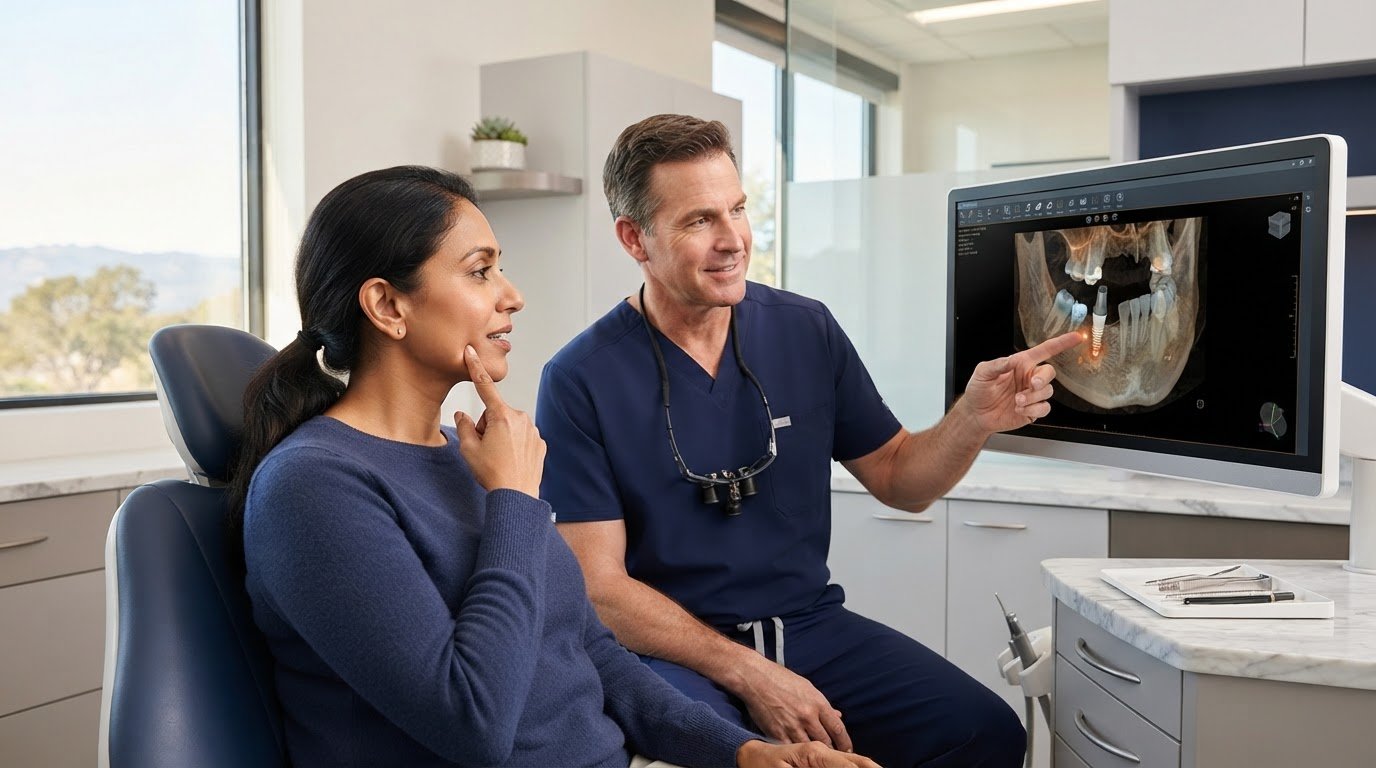
Peri-implant mucositis refers to inflammation of the soft tissues around an implant without the additional bone loss that characterizes peri-implantitis. These conditions cannot reliably be distinguished by looking in a mirror. A clinician may assess bleeding, tissue measurements, cleaning access and appropriate imaging compared with earlier records.
Compare common findings without self-diagnosing
| Situation | General distinction | Appropriate next step |
|---|---|---|
| Stable, healthy tissues | No concerning inflammation identified at examination. | Continue individualized cleaning and monitoring. |
| Peri-implant mucositis | Soft-tissue inflammation without associated progressive bone loss. | Professional assessment and plaque-control treatment. |
| Peri-implantitis | Inflammation with loss of supporting bone. | Evaluate severity and discuss an individualized treatment plan. |
| Early surgical healing | Some temporary tenderness or swelling can occur after placement. | Follow surgical instructions and report unexpected or worsening symptoms. |
| Loose restoration | A connector or prosthesis may move even when the implant itself does not. | Avoid testing or tightening it; contact the treating team. |
Build a cleaning routine that fits your restoration
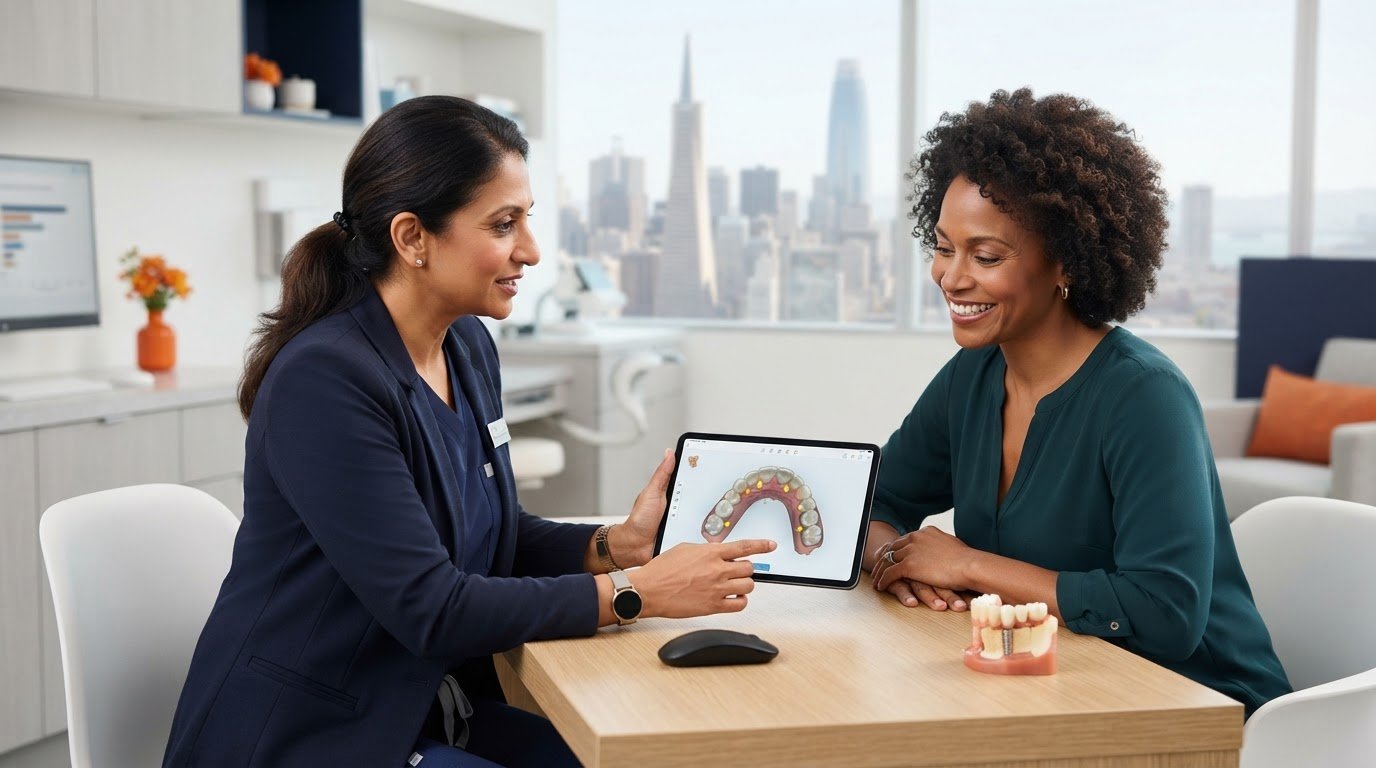
For healed implants, gentle brushing twice daily and daily cleaning between teeth or beneath a bridge are common foundations. The exact tools depend on your restoration and tissues. Your dental team can demonstrate an appropriately sized interdental brush, floss aid or other device rather than leaving you to guess.
A full-arch bridge needs cleaning underneath, not just along the visible front surfaces. A removable implant denture requires care of both the appliance and its attachments. Ask your clinician to watch you use the recommended tools so areas that are difficult to reach can be addressed.
Immediately after surgery, the rules are different. Do not direct a water flosser at a fresh surgical site or begin aggressive cleaning without approval. Follow the specific implant surgery recovery instructions you receive and ask when to transition to long-term care.
Share risk factors without changing medication yourself
A history of periodontal disease, smoking and poorly controlled diabetes can influence implant tissue health. These are reasons for an individualized plan, not a diagnosis of inevitable failure. Tell your clinicians about changes in your health, medication or nicotine use.
If you previously had gum disease, continued periodontal care remains important around your remaining natural teeth as well. See our guide to gum disease and implant readiness for questions to raise before surgery. After placement, your review schedule should reflect your specific risks rather than a universal interval.
Know when to call
Recurring bleeding, swelling, drainage, an unpleasant taste, new discomfort or visible changes around an implant warrant contacting your dental team. Problems do not always produce severe pain, so waiting until chewing hurts can delay assessment. Do not use leftover antibiotics or try to scrape under a restoration with household objects.
Seek emergency medical help for difficulty breathing or swallowing or rapidly spreading swelling. For a loose crown, bridge or suspected implant movement, avoid chewing on the area and arrange prompt assessment. Your clinician can distinguish a repairable component issue from a problem involving the implant or tissues.
Frequently asked questions
Does bleeding mean my implant must be removed?
No. Bleeding has several possible explanations. It needs evaluation, but it does not by itself establish bone loss or a need for removal.
Can mouthwash replace cleaning under a bridge?
No. A rinse does not substitute for mechanical plaque removal. Use any prescribed rinse only as directed and ask how to reach difficult areas.
Do I still need checkups if nothing hurts?
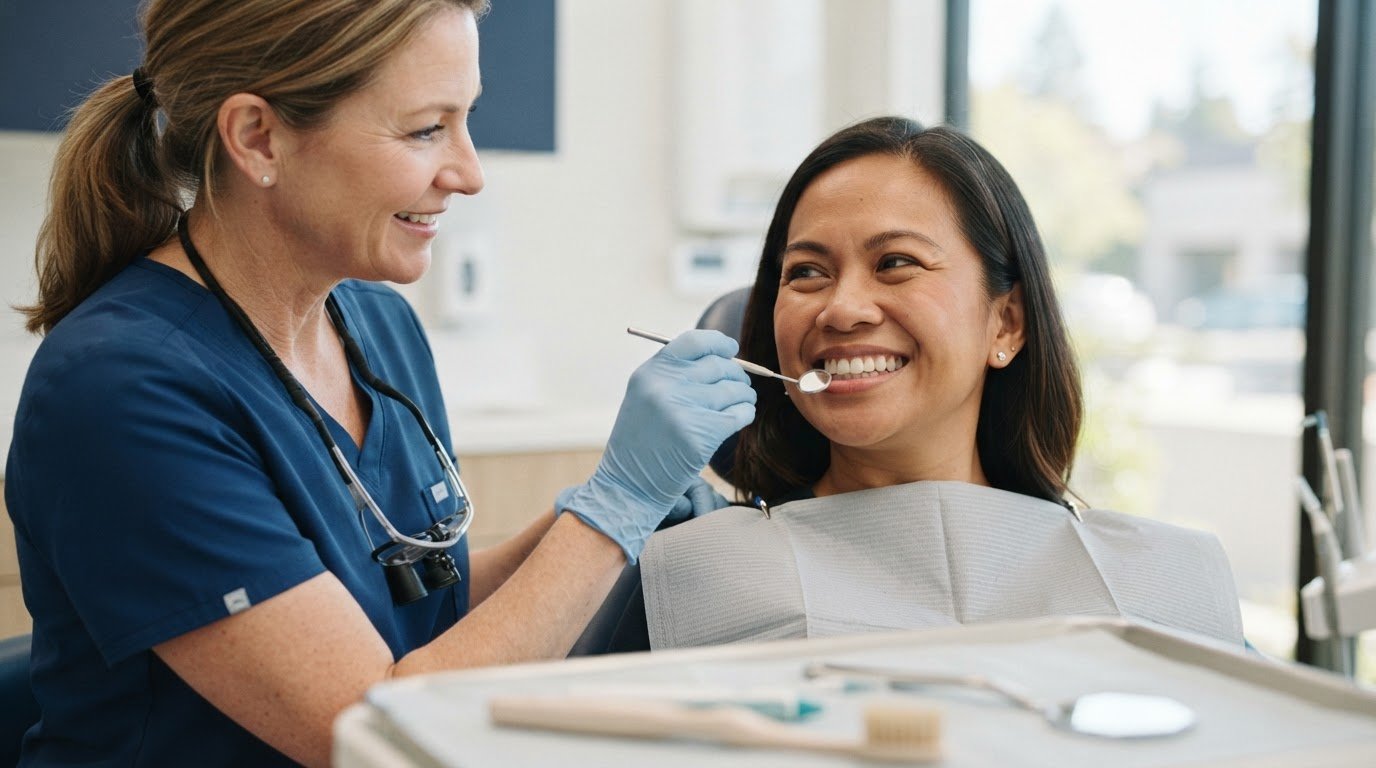
Yes. Professional monitoring can identify tissue, bite or component changes that you may not notice at home.
Get guidance for your implant care
Contact Galleria OMS in Roseville at 916-783-2110 or request an evaluation. Continue routine maintenance with your treating dental team. This article explains general principles and cannot diagnose an implant problem remotely.