A change around a dental implant can be unsettling, especially if you are unsure whether the problem is the visible tooth, the connector or the implant in the bone. Those distinctions matter. A loose crown does not automatically mean the implant has failed, and a firm restoration does not rule out a tissue problem.
Galleria OMS in Roseville can assess surgical concerns and coordinate with your restorative dentist when a replacement tooth or connector needs attention. The goal of reassessment is to identify the cause before deciding whether repair, tissue treatment or revision surgery is appropriate.
Key takeaways
- “Implant revision” can describe different procedures; ask what specifically needs changing.
- New movement, drainage or persistent discomfort deserves prompt evaluation.
- Do not tighten, glue or repeatedly test a loose restoration at home.
- Prior records help, but urgent assessment should not wait for paperwork.
Separate the parts of an implant restoration
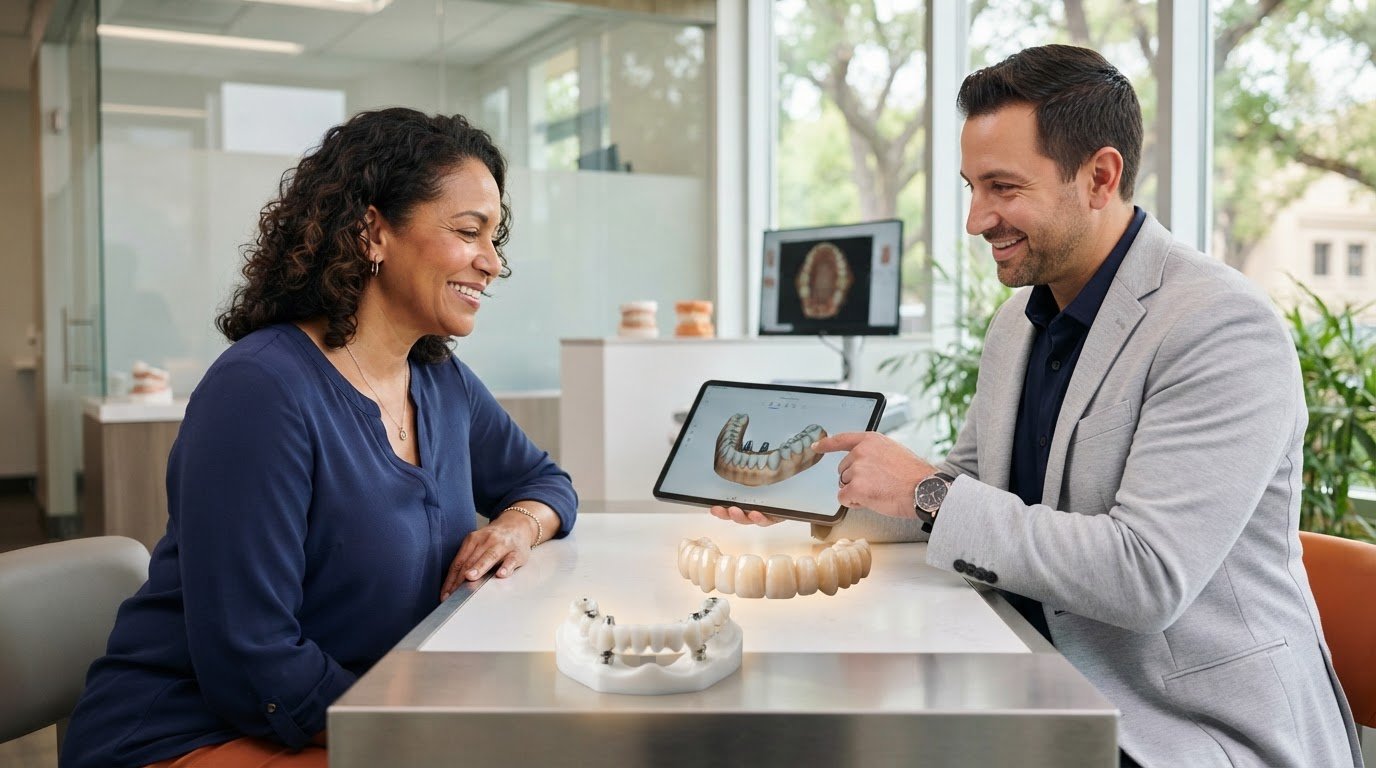
The implant is the support within the jaw. A connector, often called an abutment, joins it to the visible crown, bridge or denture components. A mechanical problem may involve one of those upper parts while the implant remains integrated with bone.
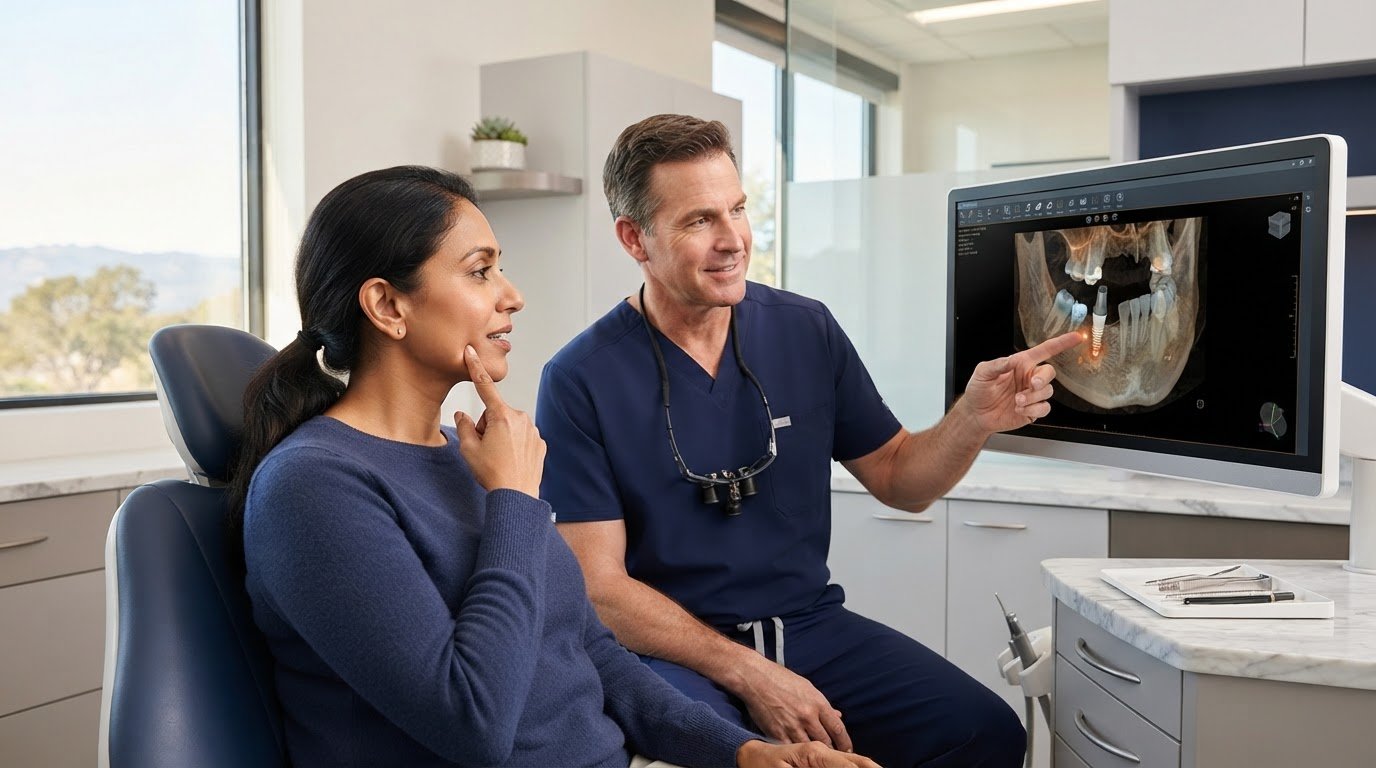
Other problems involve the surrounding gums, supporting bone, bite or implant position. Symptoms overlap, so an examination is necessary. Your team may assess the restoration, tissue health and bite and compare current imaging with earlier records when appropriate.
Compare possible concerns and responses
| Concern | Possible explanation | What evaluation may lead to |
|---|---|---|
| Loose or rocking crown | A connector, screw or restoration issue. | Component repair or replacement if the implant is otherwise suitable. |
| Bleeding or swollen tissue | Inflammation around the restoration. | Hygiene changes and professional treatment based on severity. |
| Bone changes around an implant | A biological or mechanical problem requiring investigation. | Tissue treatment, monitoring or surgical options depending on findings. |
| Implant movement | Possible loss or absence of stable bone support. | Prompt surgical assessment; removal may be necessary. |
| Chipped replacement tooth | Restorative damage, sometimes related to bite forces. | Restorative repair and assessment of contributing factors. |
Know when to seek help
Contact your treating dental team promptly for new mobility, drainage, increasing pain, swelling or a changed bite. Avoid chewing on a loose restoration and do not attempt to repair it with household adhesives or tools. Repeatedly moving it to “see if it is still loose” may make a component problem worse.
Difficulty breathing or swallowing or rapidly spreading swelling requires emergency medical care. Do not wait for a routine implant appointment in those circumstances. For less dramatic but persistent symptoms, arranging an assessment is still preferable to assuming they are normal.
What to bring to a reassessment
If available, bring the original treatment plan, placement date, implant brand and component details, previous X-rays and restorative records. Note when symptoms began, whether they are changing and any recent bite changes or trauma. A medication list and relevant medical history also help.
You can request transfer of records from your previous team, but do not delay an urgent visit while waiting. Our guide to transferring implant care explains how records support continuity. The new clinician may still need an examination and additional imaging.
Revision is not always the first or only option
If the implant is stable and correctly positioned, a damaged or loose prosthetic component may be managed by the restorative dentist. Soft-tissue inflammation may require professional cleaning and changes to home care. More advanced problems need a different discussion, potentially including surgery.
When removal is recommended, ask why retaining the implant is not advisable, what alternatives exist and how the site would be managed afterward. Replacement may involve healing, grafting or a revised restorative approach, and it is not always possible or appropriate. No evaluation can promise that every implant can be saved.
Address the cause before replacing a component
A repair plan should consider why the problem developed. Cleaning access, inflammation, the bite, grinding, smoking and health changes may influence long-term care. Replacing a broken part without investigating a recurring cause can leave the underlying issue unresolved.
Ask who will provide follow-up and whether the surgical and restorative teams have agreed on the plan. If you are considering a second opinion, request a clear explanation of findings and the benefits and limitations of each option.
Frequently asked questions
Does pain mean an implant is failing?
Not necessarily. Pain can arise from several structures and conditions. It needs examination rather than an online diagnosis.
Can an implant be replaced immediately after removal?
Sometimes, but site condition, infection, bone and the restorative plan determine timing. A staged approach may be recommended.
Should I take leftover antibiotics?
No. Do not self-prescribe. A clinician needs to identify the problem and decide what treatment is appropriate.
Arrange an implant evaluation
Call Galleria OMS at 916-783-2110 or request an appointment in Roseville. For background, read about signs that warrant implant assessment. This article is general education and cannot determine whether your implant requires revision.