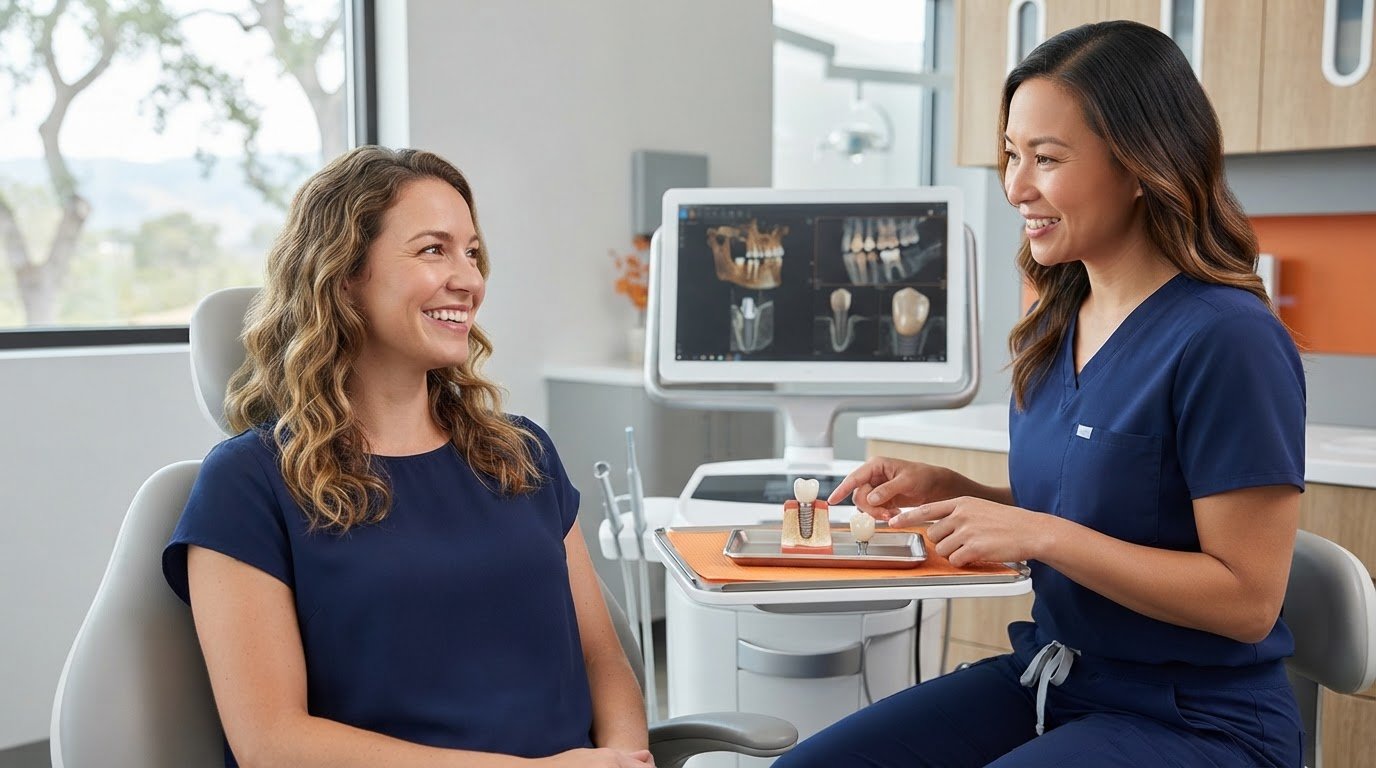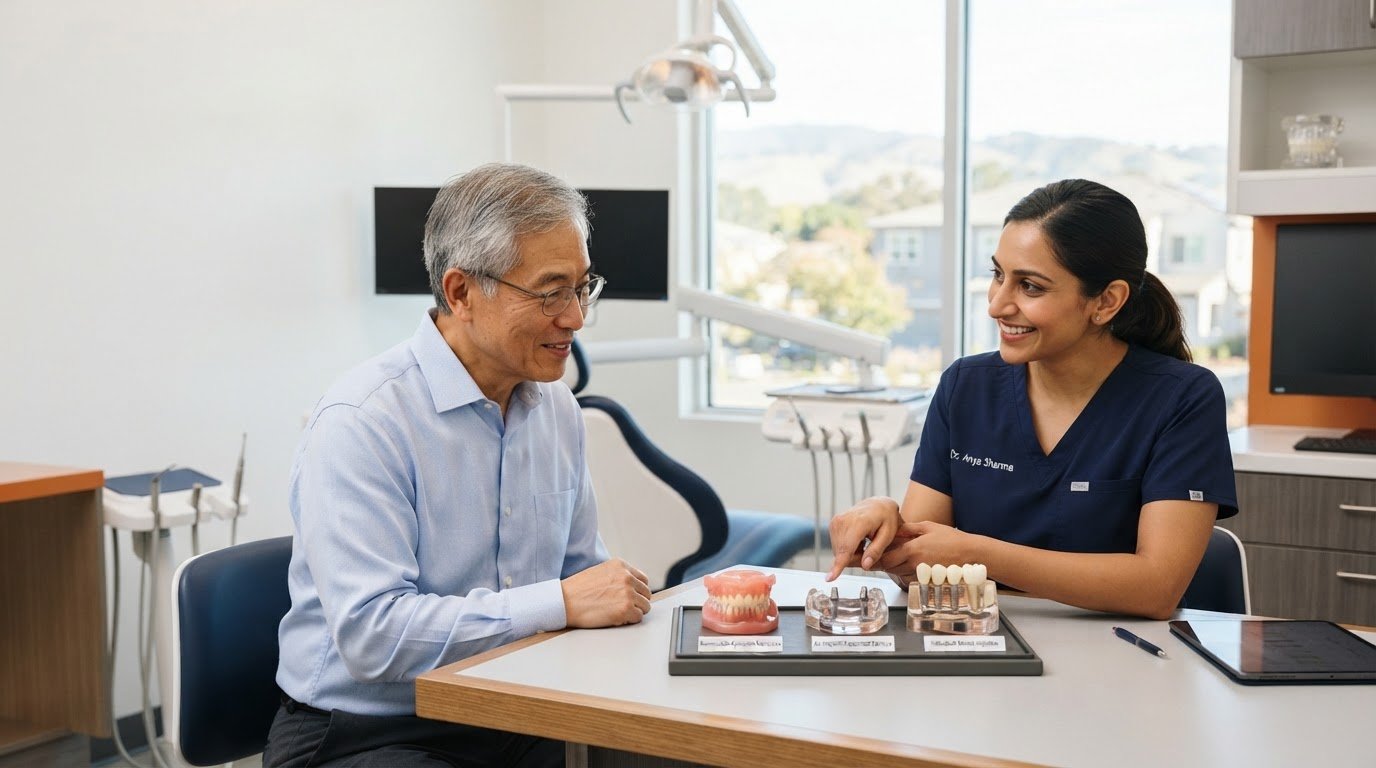

You can seek another opinion about dental implants even when treatment is underway. The difficult part is not choosing between a “chain” and a “local” label; it is preserving the clinical facts and follow-up responsibilities as your care moves between teams. This guide is a practical handoff checklist for patients who want another surgeon to review their options.
Galleria Oral & Maxillofacial Surgery is in Roseville and serves patients traveling from Sacramento, Rocklin, El Dorado Hills, Lincoln, Loomis, Elk Grove, and nearby areas. A new consultation does not mean Galleria will automatically accept an existing plan or that earlier treatment was inappropriate. It begins with an independent assessment.
Key Takeaways
- Do not cancel active follow-up or change surgical instructions solely because a second opinion is scheduled.
- Request clinical notes, images, implant details, prescriptions, and a status list of work completed and pending.
- Ask the new clinician what information is sufficient, what needs updating, and why recommendations differ.
- Compare people and processes—care coordination, restoration, follow-up, and written scope—not office ownership.
First, map where you are in treatment
The handoff looks different if you are comparing proposals before surgery versus seeking help after implant placement. Before treatment, you may mainly need imaging and a written plan. After surgery, the receiving surgeon will need to know implant positions and components, dates, healing progress, medication use, any temporary teeth, and the planned restoration. A patient with new pain or swelling should contact the treating team or another qualified dental professional promptly rather than waiting for a routine second-opinion appointment.
Make a one-page timeline: consultation dates, procedures performed, planned appointments, symptoms, and instructions currently in effect. Distinguish what a clinician told you from what you inferred. For instance, “implant placed in lower right in May; follow-up planned in June” is more helpful than “everything is healed” if integration has not been checked. Bring this timeline, but let records and examination establish the clinical facts.
Build a handoff packet that answers clinical questions
Ask for records in usable formats
Request copies of examination findings, progress notes, signed treatment plans, radiographs or 3D scans when available, surgical reports, implant manufacturer and component information, and instructions or prescriptions. Ask whether images can be sent electronically in a format the receiving office can open. Your previous office may have its own authorization process; ask what form is needed and how to track the transfer. Keep your own copies when possible.
Keep financial records separate from clinical records
Bring your prior estimate, statements, insurance submissions, and any record of payments or refunds, if relevant. They can clarify what you expected to receive, but they do not replace an independent estimate from a new practice. Ask the current office about any contractual or account questions directly. A receiving surgeon can review your health and treatment needs but cannot automatically determine how another office will handle your balance.
If a document is missing, tell the new team what you requested and when. Missing records do not necessarily prevent an initial visit, but the clinician may need new imaging or other evaluation to make a recommendation. Avoid assuming an old scan remains sufficient: anatomy or treatment status may have changed since it was taken.
Compare the care process, not the practice label
A large center and a local practice can each have good or poor communication depending on the individual team. Ask exactly who is responsible for surgery, prosthetic design, routine follow-up, and urgent questions. If a different clinician makes your final teeth, find out how they coordinate with the surgeon. Travel matters too: a Roseville office may be convenient for some patients, but the right follow-up schedule depends on the actual treatment plan.
| Topic | Current team | Prospective team |
|---|---|---|
| Records | What notes, scans, and implant details can you send? | Which files can you review, and what is missing? |
| Active care | What scheduled healing checks should remain in place? | When can you assess the site and advise next steps? |
| Restoration | Who is responsible for the provisional and final teeth? | Who would coordinate design and delivery if care changes? |
| Written plan | What care is still proposed and what is included? | What do you recommend after independent evaluation, and why? |
| Follow-up contact | Who answers questions about completed treatment? | Who would handle concerns after any new procedure? |
A step-by-step transition that avoids a gap in care
Before the second-opinion visit
Call the prospective office and describe whether you have implants already placed, a temporary restoration, healing concerns, or a procedure scheduled soon. Ask what records should arrive before your visit. Request your packet from the current provider, make your timeline, and list three priorities: perhaps clearer explanations, easier follow-up, or an assessment of whether the current plan still fits. Keep taking prescribed medications and following your treating clinician's instructions unless a qualified clinician advises otherwise.
At the review
Ask the new surgeon which records were reviewed and which conclusions require an examination or new scan. If recommendations change, ask what specific findings account for the difference. One clinician might recommend waiting for healing before final restoration; another might need to assess an implant's position or tissue health first. A difference in approach is not proof that either prior or new care is wrong. Request options, limitations, sequencing, and proposed coordination in writing.
After the review
Decide who will manage the next appointment and who to call if symptoms arise. Before canceling a scheduled healing check, confirm that the new team can assume care and that you understand any effects on treatment timing. Ask both offices about outstanding records and administrative steps. If you are also weighing a revised estimate, compare what the original plan covers with the new proposed scope rather than looking only at totals. Our implant second-opinion guide offers more questions for your visit.
If an existing implant is loose, increasingly painful, or surrounded by concerning swelling, seek timely professional evaluation. A record transfer is an administrative process, not a reason to postpone assessment of new symptoms. You can review our implant warning-sign guide for general context, but your treating team should evaluate your specific situation.
Frequently Asked Questions
Can another surgeon take over after implants are placed?
Potentially, after reviewing the site, implant information, records, and proposed restoration. The new clinician may recommend additional evaluation and cannot promise to continue every step exactly as planned by the first office. Clarify who is responsible for ongoing follow-up during the transition.
Do I have to get new scans?
Not always. The receiving clinician will assess the quality and age of prior images and whether they show the current treatment status. If new imaging is advised, ask what clinical question it will answer and whether it is included in the estimate.
What if I cannot obtain every record before the appointment?
Tell the office what is missing. An initial discussion may still be possible, but a final recommendation may require more information. Do not invent implant model names or dates from memory; mark unknown details for follow-up.
Will changing offices delay treatment?
It may, depending on records, scheduling, healing, and whether further evaluation is needed. Ask the current and prospective teams how to maintain appropriate follow-up and whether a pending appointment should stay on the calendar while your case is reviewed.
Is a local surgeon automatically better than a chain center?
No. Evaluate the individual clinician, the proposed treatment, how restorative care is coordinated, and how questions and complications are addressed. Location may affect the practicality of follow-up, but office structure alone cannot establish quality or suitability.
Bring your questions to Roseville
If you want another perspective on an implant plan or treatment already underway, contact Galleria Oral & Maxillofacial Surgery in Roseville to ask about an evaluation and what records to bring. We serve surrounding communities, but consultations are at our Roseville practice; confirm appointment details with the team.
This article is for education and does not replace advice from your treating clinicians or establish that another practice can assume your care. For urgent or worsening symptoms, seek prompt professional assessment.