A practical guide from the specialist team at Galleria Oral & Maxillofacial Surgery in Roseville, serving patients throughout Northern California.
This article provides general education and is not a diagnosis. Implant recommendations depend on an examination, medical history, 3D imaging, and coordination with the restorative dentist when appropriate.
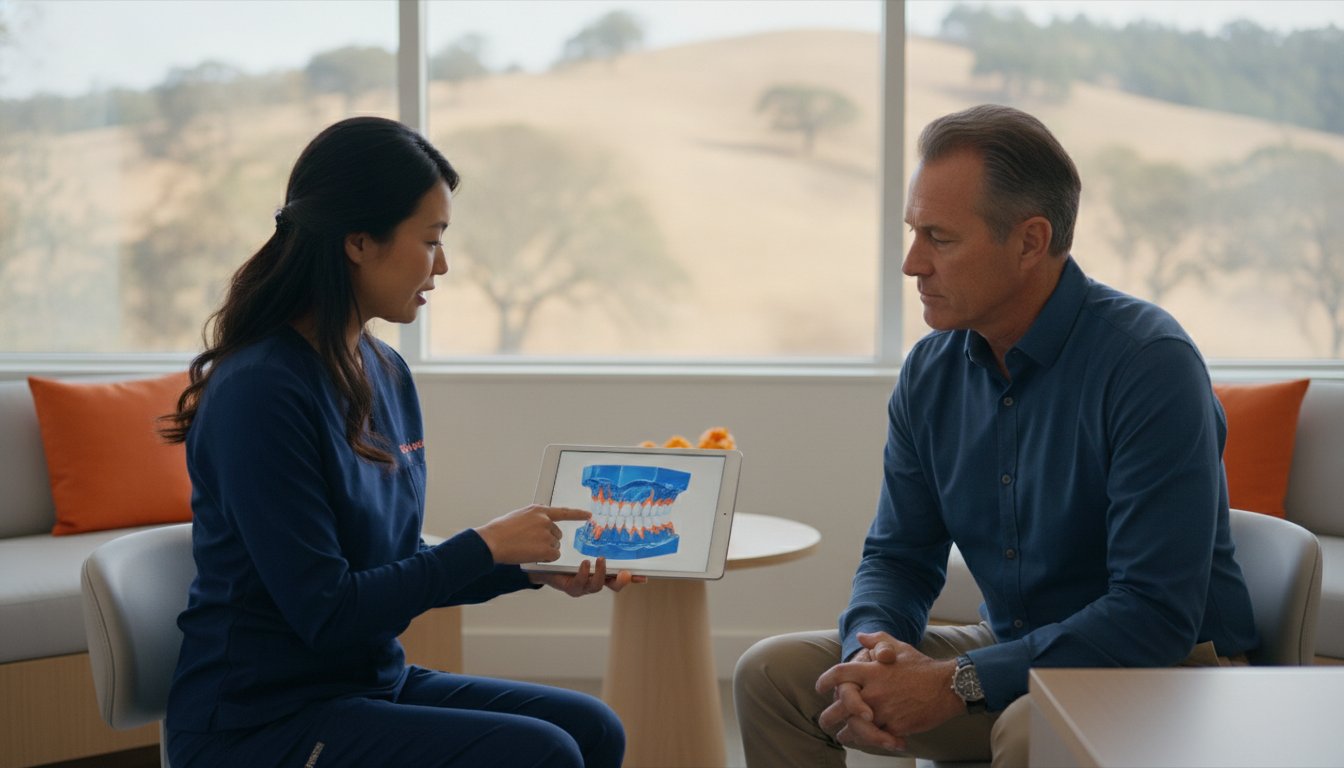
Dental implant treatment can involve a meaningful health and financial decision. If you have been told that you do not have enough bone, need extensive grafting, must remove additional teeth, or require a full-arch restoration, it is reasonable to want another specialist to review the plan. A second opinion can confirm that the original recommendation is appropriate, identify a different option, or simply help you understand the tradeoffs more clearly.
A useful second opinion is not just a search for a lower price. It is an independent review of your diagnosis, anatomy, treatment sequence, risks, restorative design, and complete cost. The goal is to help you make an informed decision without pressure.
Key Takeaways
- Consider another opinion when a diagnosis is unclear, treatment feels rushed, or plans differ substantially.
- Bring recent X-rays or CBCT scans, medical information, and an itemized proposal if available.
- Compare the complete scope—not just the advertised implant fee.
- Ask who performs the surgery, sedation, restoration, and long-term maintenance.
- Complex bone loss and failed implants may benefit from evaluation by an oral and maxillofacial surgeon.
When Should You Seek a Dental Implant Second Opinion?
You Were Told You Are Not a Candidate
Available bone, gum health, medical conditions, smoking, bite forces, and the proposed restoration all affect candidacy. Different clinicians may also have different training, technology, and experience with grafting or advanced implant techniques. Another evaluation may confirm that implants are not advisable, or it may identify a safe alternative. Learn more in our guide to dental implant candidacy.
The Proposed Treatment Is Extensive
Full-mouth extractions, sinus augmentation, major bone grafting, and fixed full-arch treatment are difficult to reverse and can involve multiple stages. Before proceeding, you should understand why each step is recommended, which alternatives were considered, and what may happen if you delay or choose a different option.
The Plan or Fee Is Difficult to Understand
A proposal should explain what is included, what remains uncertain, and which services may carry additional fees. If you cannot tell whether the quote includes imaging, extractions, grafting, sedation, temporary teeth, the final restoration, or follow-up care, an independent comparison can provide clarity.
You Have Pain, Looseness, or a Previous Implant Complication
Persistent symptoms around an implant deserve timely evaluation. A specialist may assess the implant position, surrounding bone and gum tissue, bite, infection risk, and prosthetic design before recommending observation, repair, removal, or replacement. Review the signs that an implant needs professional attention.
What Happens During a Second-Opinion Evaluation?
The clinician begins by listening to your concerns and reviewing your dental and medical history. The examination may include your teeth, gums, bite, existing prostheses, and implant sites. Recent imaging can be reviewed when it provides the necessary detail, although new imaging may be recommended if existing records are incomplete, outdated, or unsuitable for surgical planning.
For many implant cases, a cone beam CT scan provides a three-dimensional view of bone dimensions, nearby nerves, sinuses, and other anatomy. Imaging is one part of the evaluation—not a substitute for a clinical examination or thoughtful treatment planning.
General Dentist vs. Oral and Maxillofacial Surgeon
General dentists and specialists can both play important roles in implant care. General dentists often diagnose missing-tooth needs, restore implants with crowns or bridges, and provide ongoing maintenance. Oral and maxillofacial surgeons complete additional hospital-based surgical and anesthesia training and routinely manage extractions, grafting, implant placement, IV sedation, complex anatomy, and surgical complications.
The right team depends on your case. For a complex or revision procedure, a second opinion from a board-certified oral and maxillofacial surgeon can add a surgical perspective while preserving collaboration with your restorative dentist.
How to Compare Two Implant Treatment Plans
| Compare | Questions to Ask |
|---|---|
| Diagnosis | Which teeth can be preserved, and why are extractions recommended? |
| Surgical scope | Are grafting, sinus treatment, or staged procedures necessary? |
| Restoration | Is the result a crown, removable overdenture, temporary bridge, or final fixed bridge? |
| Providers | Who performs surgery, anesthesia, prosthetic work, and maintenance? |
| Timeline | Which steps happen immediately, and which require healing? |
| Total fee | What is included, excluded, or dependent on findings during treatment? |
Two quotes may look similar while describing very different treatment. Compare the same number of arches, implants, surgical procedures, sedation services, temporary restorations, and final materials. Galleria provides transparent, itemized treatment plans so patients can understand the proposed care and review financing options.
Questions to Ask at Your Appointment
- What findings on my examination and imaging support this diagnosis?
- Which options are reasonable, and what are the tradeoffs of each?
- Can any teeth be predictably preserved?
- Do I need grafting, and what is its purpose in my case?
- Am I a candidate for immediate temporary teeth, or is staged healing safer?
- What type of sedation is available, and who administers it?
- What material will be used for the temporary and final teeth?
- What are the important risks and likely maintenance needs?
- What happens if an implant does not integrate as planned?
Potential Warning Signs in an Implant Proposal
Pause if you feel pressured to sign immediately, cannot meet the surgeon before treatment, receive a complex surgical plan without appropriate imaging, or cannot obtain a written explanation of the treatment and fees. Be cautious with universal pricing before diagnosis, guaranteed outcomes, or “lifetime” language that lacks clear limitations.
A lower fee is not automatically a warning sign, and a higher fee does not prove better care. The important question is whether the plan is clinically sound, complete, understandable, and appropriate for your needs.
Could a Second Opinion Change a Bone-Loss Plan?
Sometimes. Conventional grafting, angled implants, staged treatment, and other advanced approaches may address different patterns of bone loss. All-on-4 can sometimes use available bone efficiently, but it does not eliminate grafting for every patient and should not be presented as a universal solution. Read how bone loss affects implant planning.
What Records Should You Bring?
- Recent panoramic X-rays, dental X-rays, or CBCT scan files and reports
- The written diagnosis and proposed treatment sequence
- An itemized fee estimate and financing terms
- A current medication list and relevant medical history
- Implant brand and component records for existing implants, if available
- Your questions, priorities, and concerns about the first plan
Frequently Asked Questions
Will my dentist be offended if I seek a second opinion?
Seeking another opinion before major treatment is a normal part of informed healthcare. You can ask your current office to provide copies of relevant records and imaging.
Can I seek a second opinion after an implant has failed?
Yes. Evaluation may help identify contributing factors and whether the site can be treated again. Prompt care is especially important if you have increasing pain, swelling, drainage, fever, or a loose implant.
Will I need another CBCT scan?
Not always. The surgeon will determine whether prior imaging is recent and detailed enough for diagnosis and planning. New imaging may be appropriate when your condition has changed or the original scan is unavailable or incomplete.
Can a second opinion help me compare All-on-4 plans?
Yes. Confirm whether each proposal covers one or both arches, extractions, sedation, grafting, implant components, temporary teeth, final bridge material, follow-up, and maintenance. See our All-on-4 cost comparison guide.
Does a second opinion mean the first treatment plan was wrong?
No. Two well-qualified clinicians may recommend different reasonable approaches. A second opinion may confirm the original plan while helping you understand it more fully.
Get Clarity Before You Commit
You deserve enough information to make a confident, unhurried decision about implant surgery. Dr. Alexander Antipov and Dr. André-David Kahwach evaluate straightforward, complex, and revision implant cases at Galleria Oral & Maxillofacial Surgery in Roseville.
Call 916-783-2110 or schedule a consultation.
911 Reserve Drive, Suite 150, Roseville, CA 95678.