
A practical guide from the board-certified oral surgeons at Galleria Oral & Maxillofacial Surgery in Roseville, CA, for patients across Rocklin, Granite Bay, Folsom, Lincoln, El Dorado Hills, and Sacramento.
This article is general education, not a diagnosis. A consultation and 3D imaging are the only way to determine whether implants are appropriate for you.
If a dentist has told you that you do not have enough bone, your medical history makes treatment complicated, or your case is simply “too complex,” it is understandable to feel discouraged. But an initial no is often not a final answer. Today’s implant planning, imaging, and regenerative techniques allow many people to become candidates for a stable, permanent tooth replacement.
Dental implant candidacy is not based on age alone or on a single X-ray. It is a careful assessment of your jawbone, gums, overall health, healing capacity, and goals. Here is what our Roseville oral surgeons evaluate — and how modern oral surgery can create a path forward.
Key Takeaways
- Healthy bone, stable gums, and the ability to heal are the foundations of implant success.
- Age alone does not disqualify a patient; overall health and recovery capacity matter much more.
- Smoking, uncontrolled diabetes, active gum disease, and some medications require added planning — not necessarily a permanent “no.”
- Bone grafting, sinus lifts, and full-arch techniques such as All-on-4 can help patients with bone loss.
- A 3D cone beam CT scan provides the detailed information needed to plan a safe, predictable restoration.
Dental Implant Candidacy Is More Than Missing Teeth
Missing one or more teeth is the reason people seek implants, but it is not the only requirement. An implant is a small titanium post that is placed into the jaw and later supports a crown, bridge, or full-arch restoration. It must have a healthy biological foundation to stay stable for years of chewing and speaking.
The central goal is osseointegration: the direct biological bond between living jawbone and the implant surface. When healing goes well, the implant functions much like a natural tooth root, transmitting force into the jaw and helping preserve bone. That foundation is why an oral surgeon looks beyond the visible gap before recommending treatment.
Age Is Rarely the Deciding Factor
Patients are often surprised to learn that there is no upper age limit for implants. A healthy 80-year-old may be an excellent candidate, while a younger person with uncontrolled health conditions may need treatment first. What matters is your current systemic health, ability to heal, and whether the procedure can be safely planned around your needs.
Why a Specialist Evaluation Can Change the Answer
General dentists are essential partners in your care, but complex implant surgery may call for a specialist’s evaluation. Board-certified oral and maxillofacial surgeons use 3D imaging to measure bone in every direction, locate nerves and sinuses, and determine whether grafting or another technique can make implants possible. If you were previously told “no,” a second opinion may reveal options that were not considered before.
The Biological Foundation: Bone, Gums, and Overall Health
Jawbone Volume and Density
The jawbone anchors the implant. A surgeon needs enough width and height to surround the post safely while staying clear of structures such as the sinus cavity and lower-jaw nerve. Tooth loss causes bone to shrink over time because the root is no longer stimulating it. Learn more in our guide to how bone loss affects dental implants.
Low bone volume is common and highly treatable. A graft can rebuild the site, a sinus lift can create height in the upper back jaw, and strategically angled implants can sometimes use the denser bone that remains. Your scan determines which approach is right for your anatomy.
Healthy Gums and Soft Tissue
Implants need healthy gum tissue to create a protective seal against bacteria. Active periodontal disease must be brought under control before surgery. Once infection is treated and you have a reliable hygiene routine, a prior history of gum disease does not automatically rule out implants — it simply makes long-term maintenance especially important.
Systemic Wellness and Healing
Your medical history helps us plan surgery safely. Conditions such as diabetes, heart disease, osteoporosis, autoimmune disorders, and sleep apnea do not automatically prevent implants. The key is whether they are stable and appropriately managed. We coordinate with your physician when needed and review all medications, including drugs that affect bone metabolism or blood clotting.
Common Concerns That Need Extra Planning
Smoking and Nicotine Use
Nicotine reduces blood flow to the healing tissues and can interfere with bone integration, increasing the risk of complications. That does not mean every smoker is ineligible, but it does make a cessation plan an important part of treatment. Your surgeon will give you a specific timeline for avoiding cigarettes, vaping, and other nicotine products before and after surgery.
Diabetes
Well-managed diabetes is generally compatible with dental implants. Uncontrolled blood sugar, however, can slow healing and increase infection risk. We may ask for recent medical information and work with your primary care provider before scheduling surgery, because improving control protects both your health and your investment.
Medications and Osteoporosis
Osteoporosis itself does not automatically eliminate implant treatment. Some medications used for bone conditions require special caution because they can affect jaw healing. Bring a complete medication list to your consultation; never stop a prescribed medication without direction from your physician.
How Advanced Oral Surgery Can Create Eligibility
Bone Grafting and Regenerative Treatment
Bone grafting adds volume where the ridge has narrowed or lost height. Depending on the situation, graft material may be placed at the time of extraction, around a future implant site, or as part of a larger reconstruction. Smaller sites sometimes allow implant placement at the same visit; larger grafts commonly heal for three to six months before the next stage.
Sinus Lifts
In the upper back jaw, the sinus can limit available bone height after tooth loss. A sinus lift carefully raises the sinus membrane and adds grafting material beneath it, creating a stable site for future implants. It is a predictable procedure when planned with detailed 3D imaging.
All-on-4 for Full-Arch Tooth Loss
For someone missing most or all teeth, All-on-4 dental implants may use available bone more efficiently than placing an implant under every missing tooth. The back implants are angled to maximize contact with dense bone and can often avoid major sinus or nerve limitations. In suitable cases, a fixed temporary smile may be placed the same day; see our guide to same-day dental implants.
What Happens at an Implant Consultation?
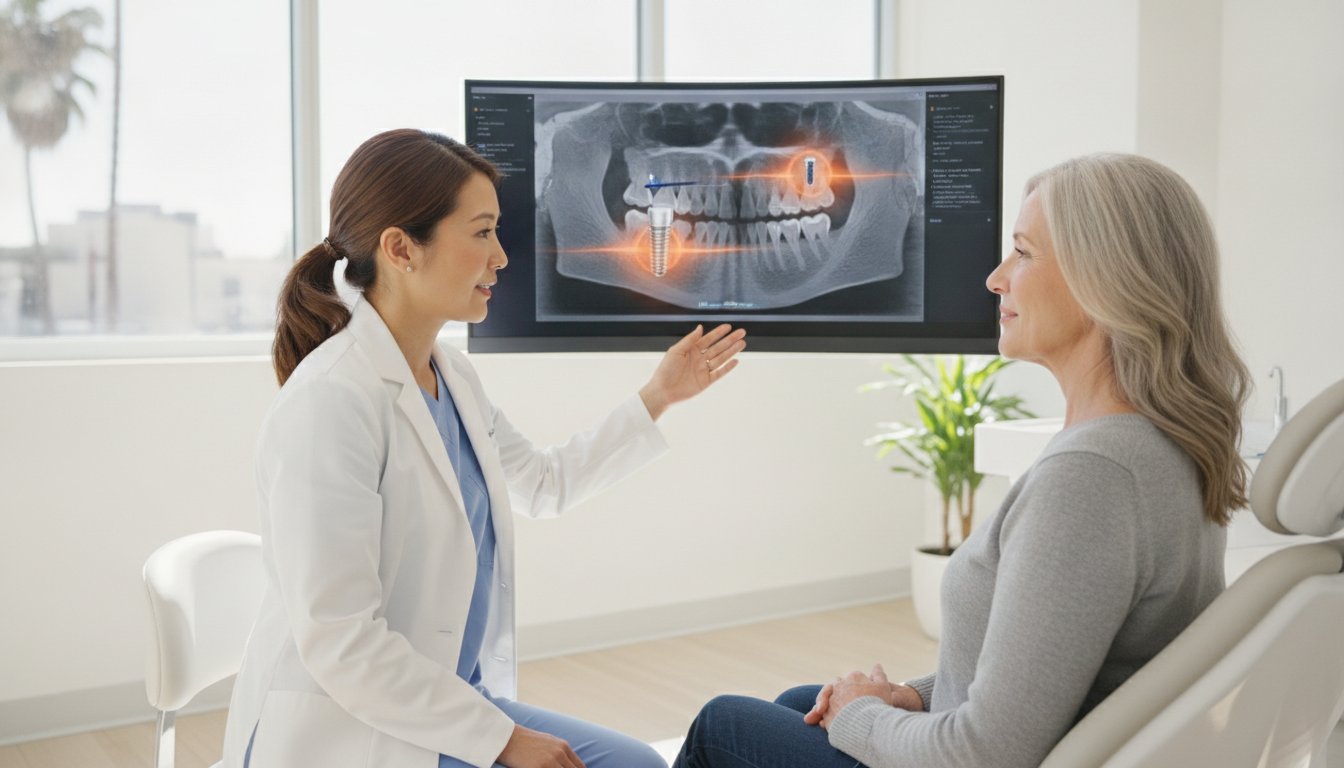
At Galleria, an implant consultation begins with a conversation about your health, previous dental treatment, and what you hope to change. We then evaluate your bite, gums, remaining teeth, and a 3D cone beam CT scan when indicated. You will see the anatomy that informs the recommendation, understand whether grafting is needed, and receive a clear sequence of care.
The goal is not to push every patient toward the same procedure. It is to identify the safest, most durable way to restore your smile — whether that is a single implant, an implant bridge, or a full-arch solution. Visit our dental implant page to explore the options, and review costs and financing before your visit.
Frequently Asked Questions
Can I get dental implants if I have osteoporosis?
Often, yes. Osteoporosis requires a careful review of bone volume and medications, but it is not an automatic disqualifier. Your surgeon and physician can coordinate when extra precautions are appropriate.
Can I get implants if I have a history of gum disease?
Yes, once active infection is treated and the disease is stable. Consistent home care and professional maintenance are essential to protect implants over the long term.
How much bone is needed for a single-tooth implant?
The exact amount depends on the tooth position and implant size, but the post needs healthy bone around it on all sides and adequate height away from nerves and sinuses. A 3D scan gives the precise answer for your site.
What if a previous implant failed?
A failed implant does not necessarily mean you cannot try again. The site may need time to heal, treatment for infection, or additional grafting before a carefully planned replacement.
Does insurance cover implant diagnostics?
Coverage varies by plan. Our team can help you understand available benefits and discuss transparent treatment plans and financing options for care not covered by insurance.
Find Out What Is Possible
The only way to know whether you are a candidate is to have your individual anatomy and health evaluated. Even if you have been told you lack bone or have a complicated history, modern oral surgery may offer a path to a permanent smile.
Call (916) 783-2110 or schedule a consultation at Galleria Oral & Maxillofacial Surgery.
911 Reserve Drive, Suite 150, Roseville, CA 95678.