
Galleria Oral & Maxillofacial Surgery in Roseville, CA offers advanced snap-in dentures to restore your chewing power and give you the confidence of a secure, implant-supported smile.
Treatment options depend on individual bone density and medical history; please consult a qualified oral surgeon for a personalized recommendation.
| Feature | Snap-In Dentures | Traditional Dentures |
|---|---|---|
| Stability | Locked to implants, won't slip or fall out | Relies on suction and messy adhesives |
| Chewing Power | Restores 60% to 80% of natural biting force | Restores only about 20% of biting force |
| Palate Coverage (Upper) | Often open palate, improving taste and temperature sensing | Covers roof of mouth, diminishing taste |
| Bone Health | Implants help preserve jawbone density | Accelerates bone loss over time |
Imagine sitting down at your favorite restaurant, eyeing a crisp apple or a perfectly cooked steak, but choosing the soup instead because you're worried your teeth might slip. For many, traditional dentures come with a hidden cost of embarrassment and dietary restrictions, often made worse by a sensitive gag reflex. If you've been searching for a way to fix these issues, snap in dentures offer a modern, secure solution that restores your ability to eat and speak without a second thought.
It's a common struggle, but your smile doesn't have to be a source of stress. This guide will show you how these implant-supported systems provide the stability you've been missing. We'll walk through the 2026 advancements in CAD/CAM digital design that ensure a precise fit and discuss why the dental implants used in these systems boast a 95% to 98% five-year success rate. From understanding the surgical journey to exploring long-term maintenance, this is your roadmap to a secure and confident future.
What Are Snap-In Dentures? Understanding the Stability You’ve Been Missing
Many people living with tooth loss feel trapped by the limitations of traditional prosthetics. You likely know the frustration of a lower denture that "floats" or an upper plate that requires thick layers of messy adhesive just to stay in place throughout a meal. Snap-in dentures represent a significant shift in restorative technology. They're a removable prosthesis that locks directly onto dental implants. This creates a mechanical connection that suction alone simply can't match. It's the difference between a device that rests on your gums and one that's anchored into your foundation.
In Roseville and across Northern California, we see patients who are tired of the constant worry that their teeth might slip during a conversation or a laugh. To answer the common question, What Are Snap-In Dentures?, they're essentially a hybrid solution. You get the convenience of a removable device that's easy to clean, combined with the structural strength of titanium roots. It's a reliable bridge between traditional dentures and permanent fixed bridges, offering a level of security that transforms your daily life.
Snap-In vs. Traditional Dentures: A Life-Changing Upgrade
Traditional upper dentures must cover the roof of your mouth to create the suction needed for stability. This bulky palate cover often leads to a diminished sense of taste and makes it difficult to sense the temperature of your food. Because snap in dentures rely on implants for stability, we can often eliminate that palate cover entirely. This restoration of sensory experience is a major victory for our patients. Beyond taste, the stability is profound. While traditional dentures typically provide only about 20% of your original biting force, an implant-supported system can restore 60% to 80% of that power. You can finally return to the crunchy or tough foods you've been avoiding for years.
The Anatomy of a Snap-In System
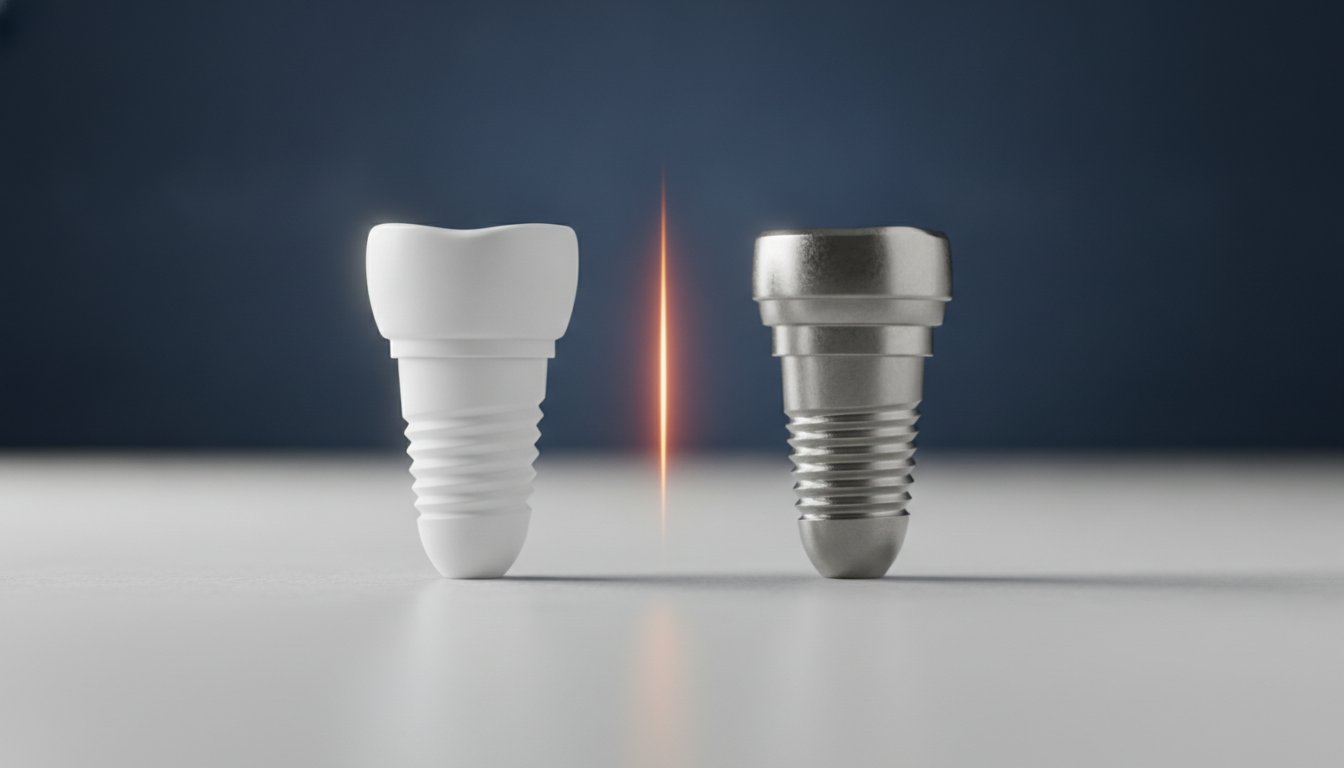
Think of the system in three distinct parts. First, there are the titanium or zirconia implant posts. These act as artificial roots, integrated directly into your jawbone to provide a permanent foundation. Next, we use specialized "locator" attachments. These serve as the docking stations that allow the denture to snap into place with a satisfying, secure click. Finally, the prosthetic itself is custom-fabricated for you. In 2026, we utilize multi-layered acrylics and advanced resins that mimic the light-reflecting properties of natural enamel, ensuring your new smile looks as authentic as it feels.
How Snap-In Dentures Work: The Mechanics of a Secure Fit
The true innovation of snap in dentures lies in the precision of their connection. Unlike traditional prosthetics that rely on the shifting landscape of your gums, this system uses a "male and female" attachment mechanism. The dental implants act as the male studs, protruding slightly above the gum line. Inside your custom denture, we place female sockets that correspond exactly to the position of those implants. When you press the denture down, these components lock together with a distinct, audible "snap."
That sound is more than just a mechanical click; it's a psychological reassurance. It tells you that your teeth are locked in place and won't move while you're enjoying a meal or giving a presentation. Understanding How Snap-In Dentures Work helps patients realize they can finally move past the era of messy adhesives and constant readjustments. While the fit is incredibly secure, the system still allows you to easily remove the denture at night for cleaning, ensuring your gums stay healthy and the prosthesis remains pristine.
Locators, O-Rings, and Housing: The Tech Behind the Smile
The secret to the customizable feel of your new smile is found in the nylon inserts, often called O-rings. These small, replaceable components sit inside a metal housing unit within the denture. They come in various levels of retention, allowing us to adjust how much force is required to snap the denture on or off. Because these nylon pieces take the brunt of the daily friction, they eventually lose their "grip." To maintain that tight, reliable fit, you'll simply need to have these inserts replaced during a quick office visit every 6 to 12 months.
Upper vs. Lower Arch Requirements
Every mouth is unique, and the number of implants required often depends on which arch we're restoring. For the lower jaw, we can often achieve life-changing stability with just two implants. The bone in the lower jaw is typically very dense, providing a solid anchor for the posts. The upper jaw is a different story. Because the bone in the upper arch is naturally softer and more porous, we usually recommend four implants to ensure the denture stays perfectly balanced. This prevents the "rocking" sensation that can occur when a system isn't properly supported, ensuring your bite remains even and powerful.
- Lower Arch: Typically 2 implants for significant stabilization.
- Upper Arch: Usually 4 implants to account for softer bone density.
- Attachment: Uses nylon "locators" for a customizable level of grip.
- Maintenance: Easy removal for hygiene with periodic insert replacements.
The Path to Restoration: Candidacy, Bone Loss, and Surgical Precision
Deciding to move forward with dental restoration is a major step toward reclaiming your health and confidence. While the results are transformative, it's important to remember that snap in dentures are a surgical solution that requires a healthy foundation. The ideal candidate typically has healthy gum tissue and a commitment to maintaining their oral hygiene. While being a non-smoker is preferred because nicotine can slow the healing process, our primary focus is your jawbone density.
Many patients come to us with the same fear: "Do I have enough bone left?" After years of wearing traditional dentures, bone resorption is a natural consequence. We address this concern using 3D CT scanning technology to map your jawbone with incredible precision. This allows our board-certified surgeons to identify the best placement for each implant, navigating complex anatomy like nerves and sinuses with absolute certainty. This level of planning ensures that your journey is predictable and focused on a successful, long-term outcome.

Overcoming Bone Loss in the Sacramento Area
For patients in Roseville or Sacramento who have experienced bone loss, we have options like bone grafting or specialized mini-implants. These procedures can strengthen the foundation, making it possible to support a secure denture. There's also a significant biological advantage to this path. Dental implants preserve facial structure by mimicking the function of natural tooth roots, which prevents the jawbone from shrinking. This prevents the sunken facial appearance that often accompanies total tooth loss, keeping your smile and your profile looking natural.
The Surgical Timeline: What to Expect
Your restoration follows a methodical, steady path. It starts with a digital planning phase where we design your smile to match your facial proportions. On the day of surgery, we often use IV sedation to ensure you're completely comfortable while the implants are placed. The most critical phase follows: osseointegration. Over the next 3 to 6 months, your bone will naturally fuse with the titanium posts. Studies show that Investing in Your Quality of Life with this type of stable system results in much higher comfort and chewing ability than conventional dentures. Once your implants are fully integrated, we'll snap in your final, custom-crafted teeth, completing your journey to a stable smile.
Investing in Your Quality of Life: Costs, Financing, and Longevity
Choosing snap in dentures is a strategic decision for your health and your budget. While permanent fixed bridges like All-on-4 offer incredible stability, they often come with a higher price point that doesn't fit every lifestyle. Snap-in systems provide a powerful middle ground. They deliver the security of dental implants at a more accessible cost because they require fewer implant posts and a less complex prosthetic design. The total investment for your new smile depends on several personal factors, including whether you need tooth extractions or bone grafting to prepare your jaw for the procedure.
We believe financial transparency is just as important as clinical precision. At Galleria OMS, we offer a price-match guarantee for California residents to ensure you receive world-class care from board-certified surgeons at the best possible value. When you consider the longevity of this system, the value becomes even clearer. While the titanium implants themselves are designed to be a permanent part of your anatomy with a 96.4% ten-year survival rate, the removable denture portion typically needs replacement every 5 to 8 years due to natural wear. It's a long-term solution that eliminates the recurring costs of adhesives and frequent relines required by traditional plates.
Financing Your New Smile in California
Many patients are surprised to learn that dental insurance often covers a significant portion of the restorative process. Most plans cover between 40% and 50% of the denture itself as a major restorative service, though coverage for the surgical placement of implants varies. To bridge the gap, we work with third-party financing partners like CareCredit. These providers offer flexible payment plans with structured APRs, making it easier to fit the cost of your transformation into your monthly budget. If you're ready to explore your options, schedule a consultation with our team to receive a personalized quote and financing breakdown.
Maintenance and Long-Term Care
Protecting your investment requires a simple but consistent daily routine. You'll need to brush your denture just like natural teeth, but it's equally important to clean the locator attachments on your gums to prevent plaque buildup. Professional check-ups are essential for monitoring the health of your implants and the condition of your O-rings. Over time, the nylon inserts in your denture will lose their grip, which is a normal part of the system's function. Replacing these locators typically costs between $100 and $150 per visit and immediately restores that satisfying "snap."
Frequently Asked Questions
Can you sleep with snap-in dentures?
It is generally recommended to remove your snap-in dentures at night. This allows your gums to rest and breathe, which is crucial for preventing infections and maintaining the health of the tissue around the implants.
Can I eat steak with snap-in dentures?
Yes! Because snap-in dentures are securely anchored to implants, they provide significantly more chewing power than traditional dentures, allowing you to enjoy a wider variety of foods, including steak, apples, and nuts.
How long do snap-in dentures last?
The dental implants themselves are designed to be permanent. However, the acrylic denture portion typically needs to be replaced every 5 to 8 years due to normal wear and tear, and the nylon locator inserts need replacing every 6 to 12 months.
Is the procedure painful?
The surgical placement of the implants is typically performed under local anesthesia or IV sedation, making the procedure itself comfortable. You will experience some soreness and swelling during the initial recovery, which can usually be managed with over-the-counter or prescribed pain medication.
Do snap-in dentures look natural?
Yes, modern snap-in dentures are custom-designed using advanced digital technology and high-quality materials to closely mimic the appearance of natural teeth and gums.
Are snap-in dentures better than All-on-4?
Both are excellent implant-supported solutions. Snap-in dentures are removable and generally more affordable, while All-on-4 provides a permanent, fixed bridge that you do not remove. The "better" option depends on your specific budget, bone density, and lifestyle preferences.

Reviewed by Dr. Alexander Antipov, DDS
Board-Certified Oral & Maxillofacial Surgeon