The familiar implants-versus-dentures debate can sound like a choice between “permanent” teeth and an appliance that moves. Real decisions are more nuanced. A comfortable conventional denture may meet one person's needs without surgery. Another person may need additional retention but prefer a removable overdenture. Someone else may want a fixed bridge and be prepared for surgery, a healing period, and specialized cleaning.
Galleria Oral & Maxillofacial Surgery in Roseville serves people considering these options from Rocklin, Lincoln, Loomis, El Dorado Hills, and the surrounding region. Here is a balanced comparison of everyday function, bone, care, and treatment demands so you can bring informed questions to your dental team.
Key Takeaways
- Conventional dentures replace missing teeth without implant surgery, but their fit may change as gums and bone change.
- Implant-supported teeth require surgery and healing; they may offer more retention but still need cleaning and maintenance.
- Removable overdentures and fixed full-arch bridges are distinct solutions with different daily routines.
- Bone loss, medical history, hand dexterity, and budget can all influence the right plan.
- No restoration is maintenance-free or guaranteed to last for life.
Begin with how each replacement stays in place
A conventional full denture sits over the gums and is retained by its fit, anatomy, and sometimes adhesive. A partial denture may also attach to remaining teeth. Neither requires implants. An implant, by contrast, is a fixture placed in bone; after healing it can hold a single crown, stabilize a removable denture, or support a fixed bridge. The implant procedure and the prosthetic teeth are connected but distinct phases of care.
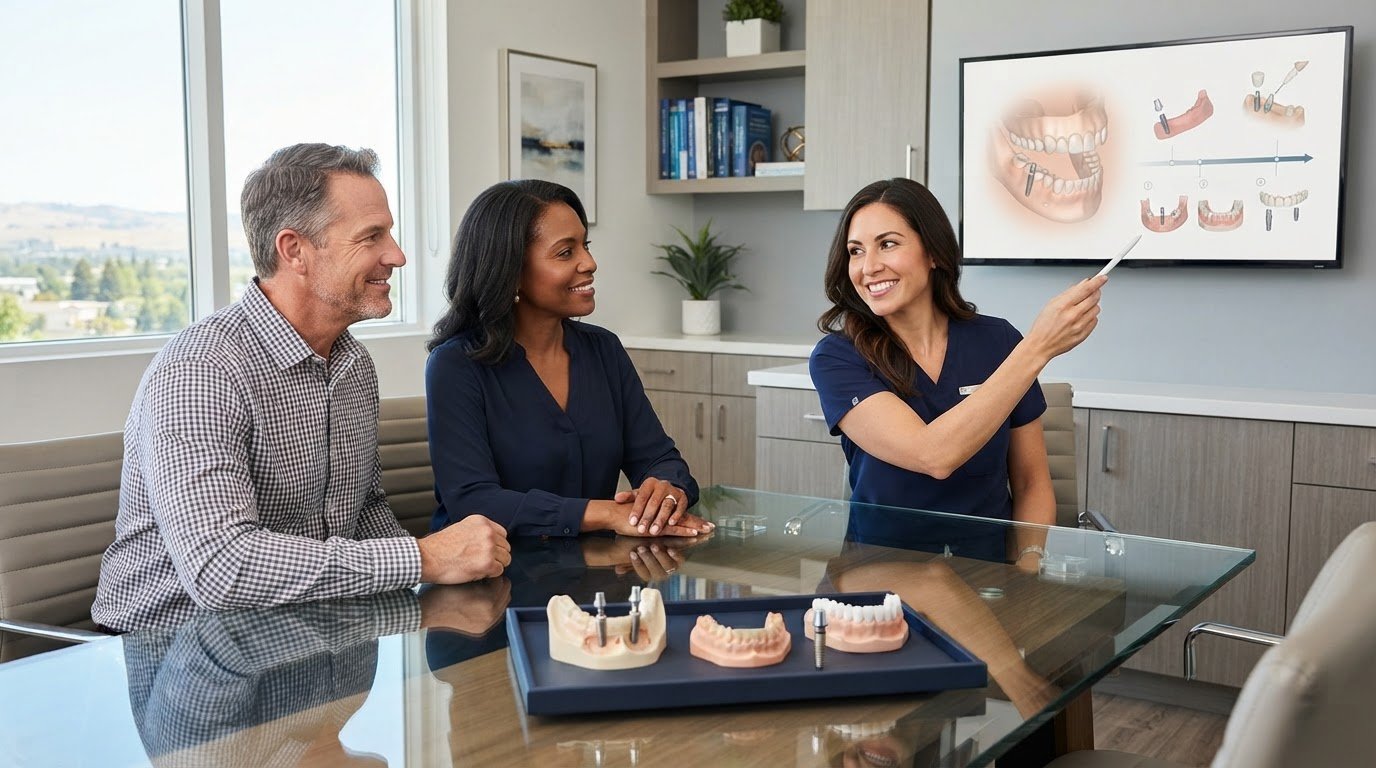
This distinction matters when someone says “implant dentures.” They could mean an overdenture that the patient removes every day or a fixed bridge removed only by a dental professional. Both rely on implants, yet their cleaning methods, required components, and repair pathways differ. Do not accept a treatment label without seeing a picture or model of the actual restoration you would receive.
Compare the everyday trade-offs
| Decision factor | Conventional denture | Implant-retained overdenture | Fixed implant bridge |
|---|---|---|---|
| Surgery | No implant surgery required. | Implants placed in the jaw. | Implants placed in the jaw. |
| Removal | You remove it for cleaning. | You detach it for cleaning. | Only a clinician removes it. |
| Retention | Fit, anatomy, and sometimes adhesive. | Attachments improve retention; parts can wear. | Secured to implants; hygiene beneath bridge matters. |
| Ongoing care | Relines and replacement as fit changes. | Denture care plus attachment and implant checks. | Daily under-bridge cleaning and professional checks. |
| Bone considerations | Does not replace tooth roots. | Implants support bone at their sites. | Implants support bone at their sites. |
What are the benefits—and limits—of dentures?
Dentures can replace many teeth without placing implants. For someone who cannot or does not want to have implant surgery, that is a meaningful advantage. They can also be adjusted as appearance and fit change. The trade-off is that a denture rests on tissues that may change over time. An initially well-fitting appliance can loosen, and eating or speaking may require practice. Soreness or repeated movement calls for a dental assessment rather than simply adding more adhesive.
Tooth loss often leads to gradual changes in the supporting ridge. A denture does not replace roots or prevent those changes. That does not mean everyone wearing dentures will have the same experience or that facial appearance changes in a predictable way. Remaining teeth, gum health, age, and the fit of the prosthesis all affect comfort and function. Regular appointments allow a clinician to assess tissue health and whether a reline or new denture is needed.
What do implants add—and what do they ask of you?
Implants anchor a restoration to jawbone rather than relying entirely on the gums for support. For some people this improves stability when speaking and chewing; the degree of improvement depends on the restoration, bite, and anatomy. Implants also help maintain bone around their placement sites, but they do not stop all jaw changes. A fixed bridge may leave the palate uncovered, while some overdentures can still have coverage depending on their design.
The disadvantages are real: surgery carries risks, bone integration takes time, and some patients need extractions or grafting before placement. Implants can develop inflammation around them, and prosthetic teeth or attachments can wear or break. You will need a plan for daily hygiene and ongoing dental follow-up. If dexterity makes cleaning beneath a fixed bridge difficult, a removable option may be worth discussing. For a fuller explanation of options, see our implant-supported versus traditional dentures guide.
The middle ground: a removable implant overdenture
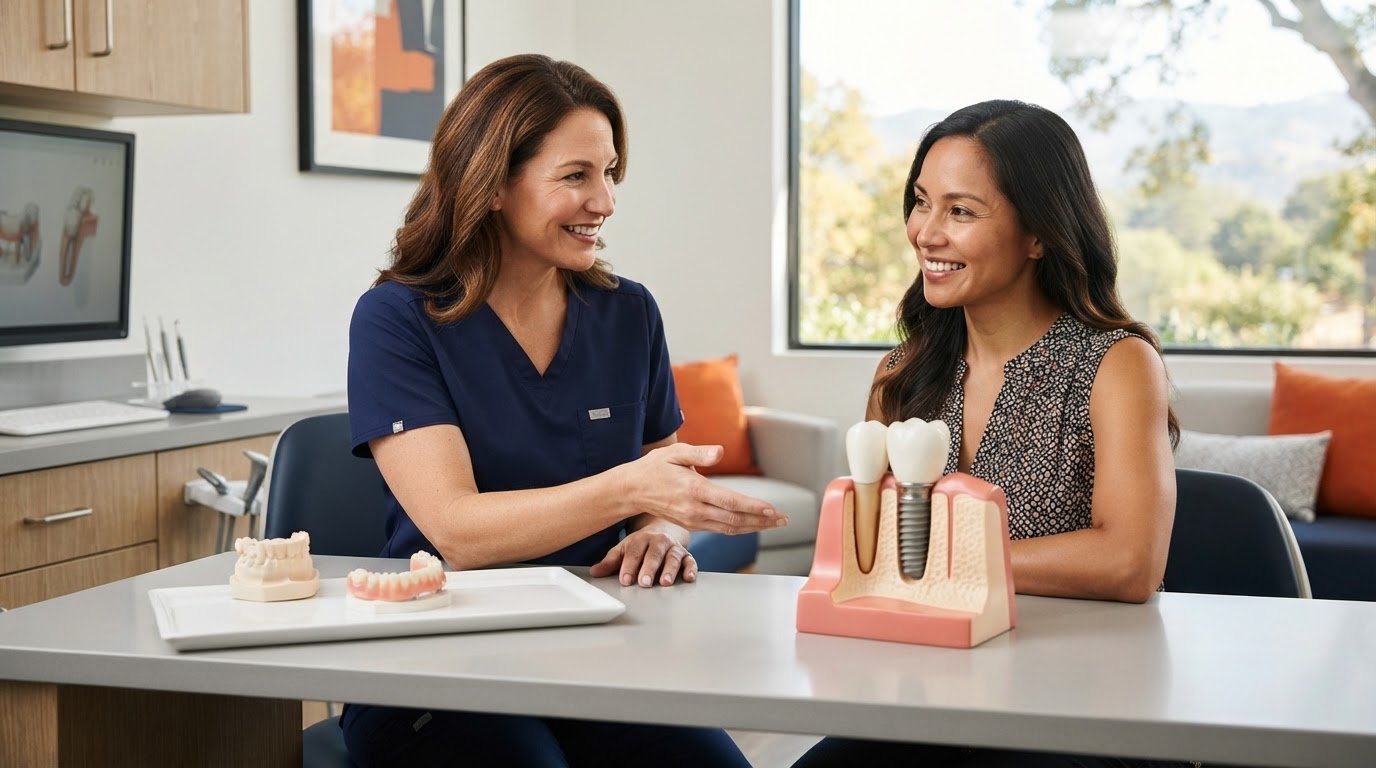
An overdenture clicks or connects onto implants, then comes out for cleaning. It may be useful when a person wants better denture retention but prefers to clean the appliance outside the mouth. Attachment inserts may wear and need replacement; the underlying denture may still need adjustments. The number and location of implants depend on the jaw and restorative design, not a universal formula. A fixed full arch offers a different daily routine, but requires careful cleaning around and under the prosthesis.
Make a decision around your own life
Think through a typical week. Is your current denture comfortable at dinner but loose during conversation? Do you have the time and dexterity for cleaning around fixed teeth? Are you willing to have surgery and follow a modified diet during healing? What support will you have after the procedure? Your answers are as relevant as the scan. Bring your existing denture to an appointment so the team can identify whether a fit adjustment alone might help.
A clinician should also review gum disease, remaining teeth, bone volume, medications, and conditions that may affect healing. If you have been told your bone is too thin, a new evaluation can clarify whether grafting or another treatment is appropriate; not everyone is a candidate for implants. Ask for written plans showing what is included, the expected sequence, and ongoing maintenance before comparing financial commitments.
Frequently Asked Questions
Are implants always better than conventional dentures?
No. Better depends on your health, preferences, anatomy, and ability to maintain the restoration. A well-fitting denture is a valid option; implants offer another type of support with surgical and maintenance commitments.
Can a current denture be attached to implants?
Sometimes an existing denture can be adapted, but its fit, strength, and design must be evaluated. In other cases a new overdenture is needed. Your restorative dentist can explain what is feasible.
Can I eat anything with a fixed implant bridge?
Not during early healing. A provisional restoration often requires a soft or modified diet, and even a final bridge may have material-specific precautions. Follow the dietary instructions for your case.
Will dentures or implants prevent all bone loss?
Neither can promise that. Dentures do not replace roots; implants provide local support at their sites but do not prevent changes everywhere in the jaw. Your clinician can explain what your imaging shows.
Which is easier to clean?
A removable denture can be cleaned outside the mouth. Fixed implant bridges need careful cleaning around implant sites and under the bridge, sometimes with specialized tools. Both require regular professional review.
This comparison is educational and does not diagnose your condition or replace individualized advice. An examination is needed to determine whether implants, dentures, or another option is appropriate.
Talk through the trade-offs in Roseville
If you are weighing a new denture against implant support, contact Galleria Oral & Maxillofacial Surgery in Roseville for an evaluation. We can discuss the surgical considerations with you and coordinate with your restorative dental team on a plan that reflects your goals.