Two implant-denture proposals may look dramatically different because they describe different treatments. One might include placement of implants only; another might cover a removable overdenture, anesthesia, and a temporary appliance. Without identifying the same components on both documents, the quoted totals cannot tell you which plan better fits your needs.
This guide is for patients researching implant-supported dentures in Roseville and nearby cities. Galleria Oral & Maxillofacial Surgery is based in Roseville and serves patients from Rocklin, Lincoln, Granite Bay, Loomis, and the surrounding area. We will not give a universal price: an accurate estimate requires a clinical evaluation and an agreed restorative plan. Instead, here is how to understand the scope of a quote and prepare for a useful financial conversation.
Key Takeaways
- Ask whether “implant-supported denture” means a removable overdenture or a fixed full-arch bridge; they are not interchangeable.
- Diagnostic imaging, extractions, grafting, anesthesia, implants, provisional teeth, and final teeth may appear as separate items.
- Compare one arch with one arch, and check whether the surgeon and restorative dentist bill separately.
- Allow for future maintenance such as denture relines, attachment replacement, or prosthetic repairs.
- Coverage and financing vary; approvals and benefit estimates are not guarantees.
Define the restoration before comparing estimates
A removable implant-retained overdenture uses attachments on implants to help keep a denture in place. You take it out to clean it. A fixed full-arch bridge is secured to implants and generally comes out only at a clinician's office. Some patients call both “implant dentures,” but they have different components, fabrication steps, hygiene routines, and maintenance needs. Ask your dentist to show you precisely what will be delivered and whether the proposal concerns your upper jaw, lower jaw, or both.
The number of implants is determined by the planned restoration, available bone, and clinical judgment, not by a universal package. If your existing teeth must be removed, their condition and extraction plan also affect the sequence. Bone grafting may be necessary in some locations and not others. A clinician may recommend staged healing rather than immediate loading if stability or other factors do not support attaching teeth on surgery day.
Use this scope comparison alongside each written quote
| Component | What to confirm | Why estimates may differ |
|---|---|---|
| Diagnosis and planning | Exam, imaging when indicated, and restorative coordination. | Some proposals start after diagnostic fees. |
| Site preparation | Extractions, grafting, or other planned procedures. | Needs depend on teeth and bone condition. |
| Implant surgery | Number of fixtures, components, and anesthesia plan. | Surgical scope differs by restoration and anatomy. |
| Teeth during healing | Will there be an interim denture or provisional bridge? | Same-day provisional treatment is conditional. |
| Final restoration | Removable or fixed, material, and who fabricates it. | Design and laboratory steps are not identical. |
| Aftercare | Included visits, adjustments, and future upkeep. | Ongoing care may be billed separately. |
Why anatomy changes the treatment scope
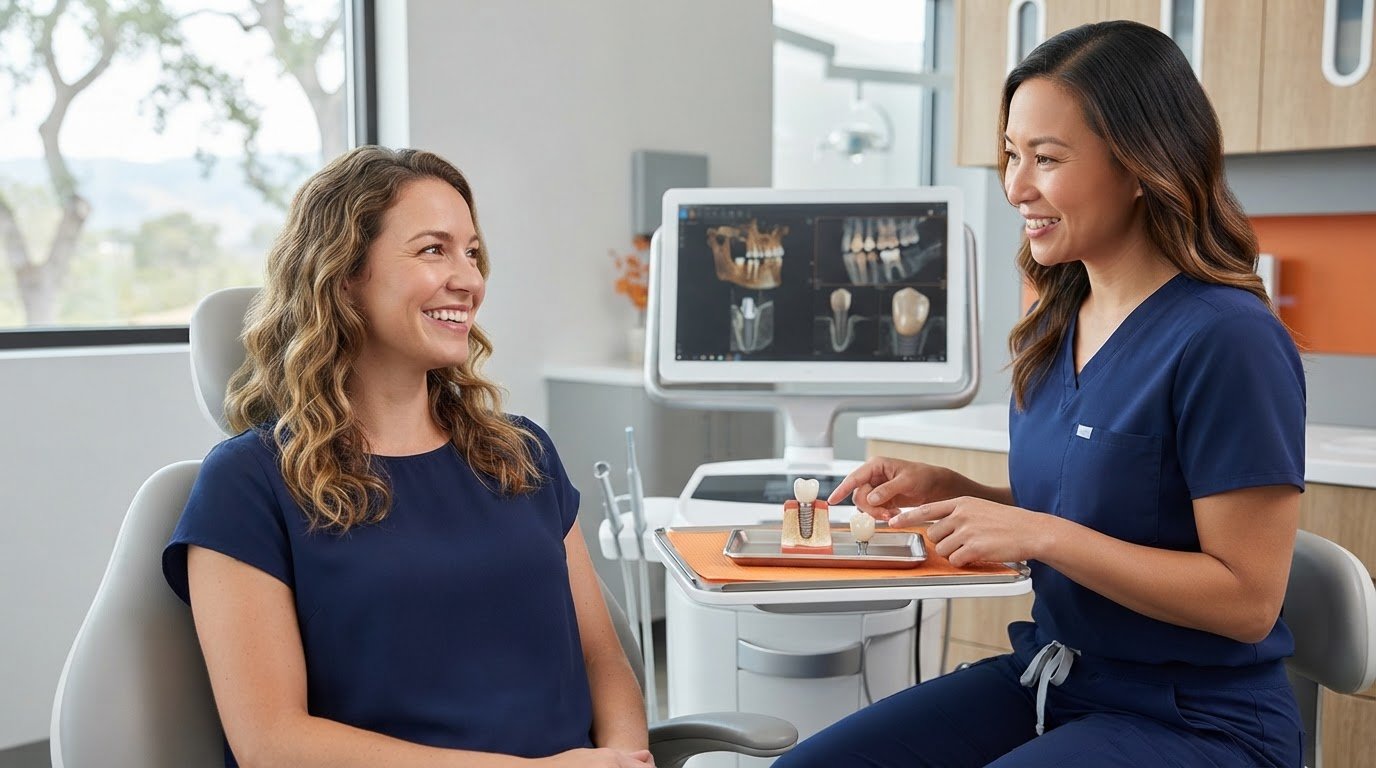
During the examination, the clinician looks at remaining teeth, gum health, bite, and medical history. If indicated, a cone-beam CT scan maps the bone and nearby structures. An existing denture may provide clues about tooth position and the amount of support needed for the final design. The scan may show room for straightforward placement, or it may raise questions about bone volume that require grafting, different implant positions, or another option.
Suppose one patient has already healed after extractions and wants a lower removable overdenture. Another needs several teeth removed and wishes to discuss a fixed restoration in both jaws. Even if both call the treatment “implant dentures,” the clinical and laboratory scopes will not match. Do not infer that a higher or lower estimate proves anything about quality until you have compared diagnoses and deliverables.
Ask about the temporary phase and long-term care
Some people can have implants placed and receive a provisional restoration the same day. Eligibility is assessed individually and may not be confirmed until stability is evaluated at surgery. That temporary restoration often requires a modified diet while implants integrate. Others may wear a modified removable denture while healing. Clarify which plan applies to you and whether the final denture or bridge is included in the quoted total.
Upfront cost is only one part of ownership. Attachment inserts in some overdentures wear and may need replacement; dentures can require relining as tissues change. Fixed bridges and implant sites need professional checks, and prosthetic components may need adjustment or repair. Neither type of restoration eliminates daily cleaning or routine dental care. Before signing, ask which follow-up visits are included and who will help if something loosens or breaks later.
Insurance and financing: read the details
Dental plans vary in how they cover surgery, prosthetic components, diagnostic services, and annual limits. An insurer's predetermination can help you plan but does not guarantee payment; eligibility and benefits can change. Ask the office to separate covered and noncovered estimates, and check your plan documents for deductibles, waiting periods, and exclusions. HSA or FSA use depends on your plan and applicable rules, so verify eligibility with your administrator.
If you consider financing, review the application and repayment terms rather than relying only on a monthly payment illustration. Ask about interest, fees, promotional terms if any, and what happens if you pay late. Financing is subject to approval; availability and terms vary. Our financing page explains how to start the discussion. For the differences in treatment design, read our fixed arch versus snap-in denture comparison.
A practical estimate-review exercise
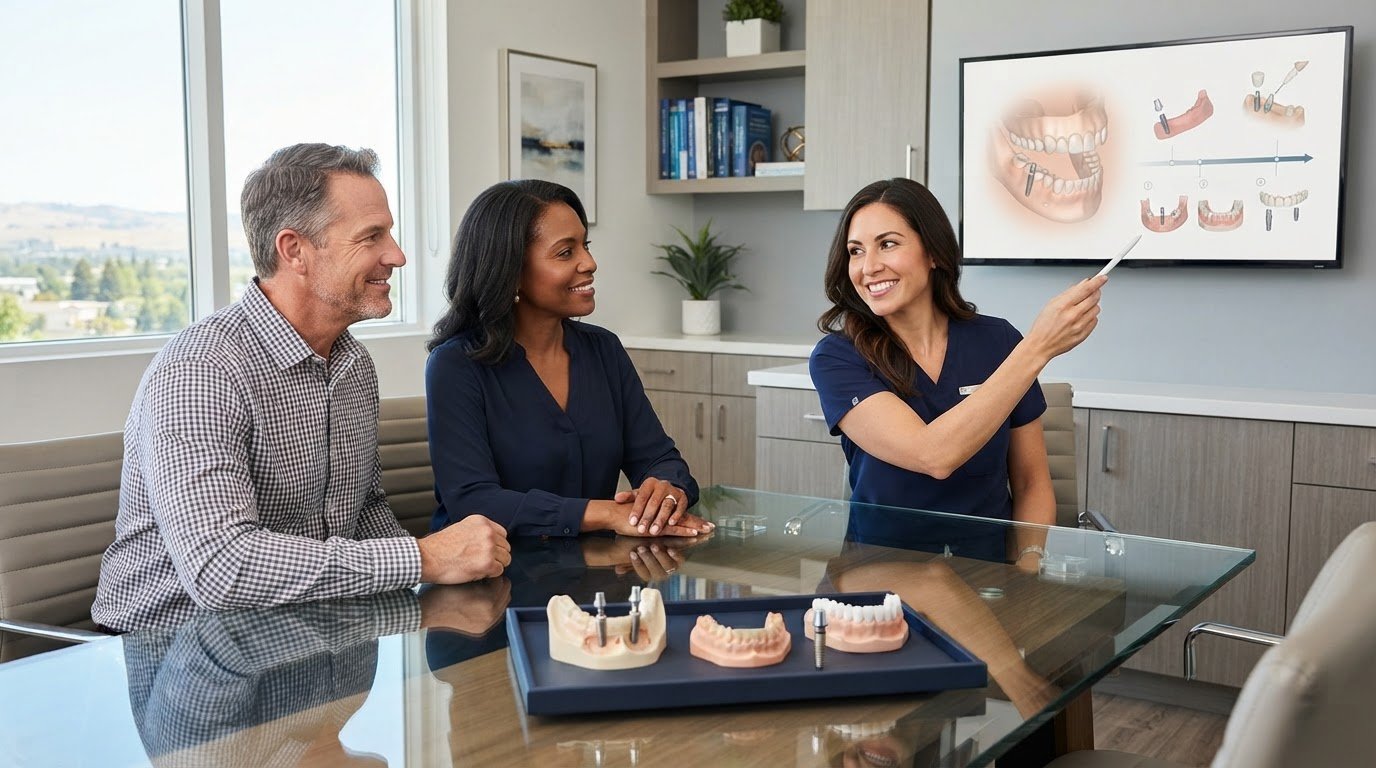
Bring two proposals to a consultation and underline every reference to the final teeth. Circle anything labeled provisional, temporary, or interim. Then mark whether the estimate includes one or both arches, which clinician supplies the prosthesis, and what happens if grafting becomes necessary. If a line is unclear, request a written explanation. You should be able to describe in one sentence what you will have after surgery, what you will have after healing, and which appointments remain.
It is reasonable to ask about alternatives, too. A well-fitting conventional denture, a removable implant overdenture, and a fixed full arch solve different problems. The lowest upfront figure may not be the best fit for your habits; the most extensive procedure may be unnecessary. An informed decision weighs clinical risks, everyday cleaning, future maintenance, and your financial circumstances together.
Frequently Asked Questions
Can you tell me an implant-denture price without an exam?
A generic figure cannot account for which jaw is treated, existing teeth, bone, restoration design, or possible preparatory care. An examination and written treatment plan are needed to estimate your case.
Is the final denture included when I pay for implants?
Not necessarily. Surgical placement and restorative fabrication may be quoted and billed separately. Ask for the itemized scope of both the healing appliance and final teeth before deciding.
Does insurance always help pay for an overdenture?
No. Coverage varies by policy and by the services billed. Confirm your own benefits and understand that a predetermination is an estimate, not a promise of reimbursement.
Are fixed arches maintenance-free because they cannot be removed at home?
No. Fixed arches require meticulous daily cleaning and professional monitoring. The prosthesis and implant components may need servicing over time.
Do I need a bone graft before implant-supported dentures?
Not everyone does. Grafting depends on the available bone, proposed implant positions, and restorative plan. Imaging and a clinical examination help determine whether it belongs in your estimate.
This article provides general educational information, not a price quote, financial advice, or an individual treatment recommendation. Your clinical plan, insurance coverage, and financing terms require separate verification.
Request a clear plan in Roseville
Galleria Oral & Maxillofacial Surgery can help you understand the surgical portion of implant-supported tooth replacement and coordinate planning with your restorative dentist. Contact our Roseville office to discuss an evaluation, and bring any existing denture, scans, and written proposals with you.