
A guide to stable, implant-supported dentures from the board-certified oral surgeons at Galleria Oral & Maxillofacial Surgery in Roseville, CA, serving Sacramento, Rocklin, Granite Bay, Folsom, Lincoln, and El Dorado Hills.
This article is general education. The right restoration depends on your health, jawbone, bite, and goals, which can only be evaluated in a personal consultation.
Living with a loose denture can turn ordinary moments into calculations: which food is safe, whether you can laugh freely, and whether adhesive will hold through the day. Traditional dentures can be a helpful tooth-replacement option, but they rest on the gums rather than connecting to the jawbone. As the jaw changes over time, even a well-made denture can begin to slip, rub, click, and lose its fit.
Implant dentures create a different foundation. Whether you choose a removable snap-in denture or a fixed full-arch restoration, dental implants anchor your new teeth to your jaw so they can stay secure while you speak, eat, and smile. Here is how these options work and what to consider as you search for a solution that does not slip.
Key Takeaways
- Traditional dentures loosen as the jawbone naturally shrinks after tooth loss.
- Dental implants provide an anchor within the jaw, rather than relying on suction or adhesive.
- Snap-in dentures are removable and typically supported by two to four implants per arch.
- Fixed full-arch options such as All-on-4 are secured in place and offer the closest experience to natural teeth.
- 3D imaging and careful surgical planning are essential to a stable, long-lasting result.
Why Traditional Dentures Slip
Natural tooth roots continuously stimulate the jawbone when you chew. Once teeth are lost, that stimulation disappears. The body gradually reabsorbs the unused bone in a process called alveolar bone resorption. As the bony ridge beneath a denture becomes narrower and flatter, the denture loses the shape it needs to grip.
This is especially challenging in the lower jaw, where the tongue and cheek muscles can easily shift a gum-supported denture. Adhesives may temporarily improve retention, but they cannot replace the missing biological foundation. Repeated friction can also create sore spots, making patients limit what they eat and how confidently they speak.
Dental implants address the underlying issue by replacing the root-like connection. Once implants integrate with the bone, they provide a stable anchor for a new set of teeth and deliver functional stimulation to the jaw. Read more about bone loss and dental implants.
How Implant Dentures Create a Secure Foundation
An implant is a small titanium post placed in the jawbone. During healing, the surrounding bone grows against the implant surface in a process called osseointegration. This biological bond is what allows an implant to support chewing forces without shifting the way a conventional denture can.
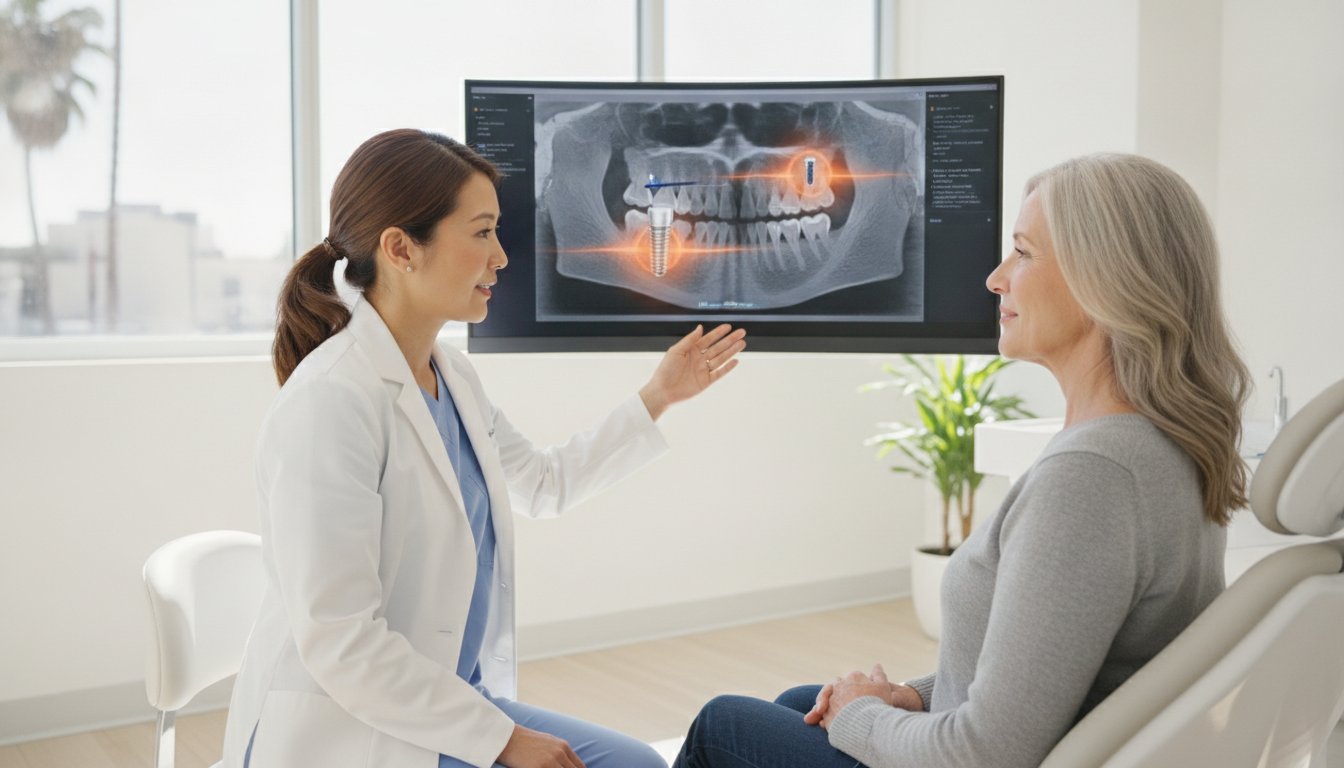
After integration, attachments or a fixed bridge connect the new teeth to the implants. The number, size, and position of implants are planned around your available bone, bite forces, and restoration type. A cone beam CT scan gives your surgeon a three-dimensional view of the jaw, including important structures such as nerves and sinus cavities.
Two Ways to Stop Dentures from Slipping
Snap-In Dentures: Secure and Removable
A snap-in denture, also called an implant-retained overdenture, uses connectors that snap onto implants. It is stable while you wear it, but you remove it at night to clean the denture and attachment sites. Most snap-in systems use two to four implants per arch, though the right design is always individualized.
This option is ideal for many people who want a major improvement over a loose conventional denture while keeping a removable appliance. It can improve speaking confidence, chewing ability, and comfort without the need for adhesives. Visit our detailed snap-in dentures guide for more information.
Fixed Full-Arch Dentures: A Permanent Option
Fixed full-arch treatment uses a bridge that is secured to multiple implants and can only be removed by a dental professional. The teeth stay in your mouth day and night, and many patients find this feels most similar to having natural teeth again. You clean beneath the bridge with special flossing tools or a water flosser.
All-on-4 dental implants are a popular full-arch method. Four or more implants are placed at strategic angles to maximize available bone, often making a fixed smile possible even for patients with some bone loss. In suitable cases, a temporary fixed bridge can be placed on the same day as surgery.
| Feature | Snap-In Dentures | Fixed Full-Arch Dentures |
|---|---|---|
| Connection | Snaps onto implant attachments | Bridge is secured to implants |
| Removable at home | Yes | No |
| Typical implant count | 2 to 4 per arch | Usually 4 or more per arch |
| Daily care | Remove and clean denture and attachments | Brush and clean beneath the bridge |
| Best for | Patients who prefer removability and stability | Patients seeking a non-removable smile |
What the Treatment Process Looks Like
Consultation and 3D Imaging
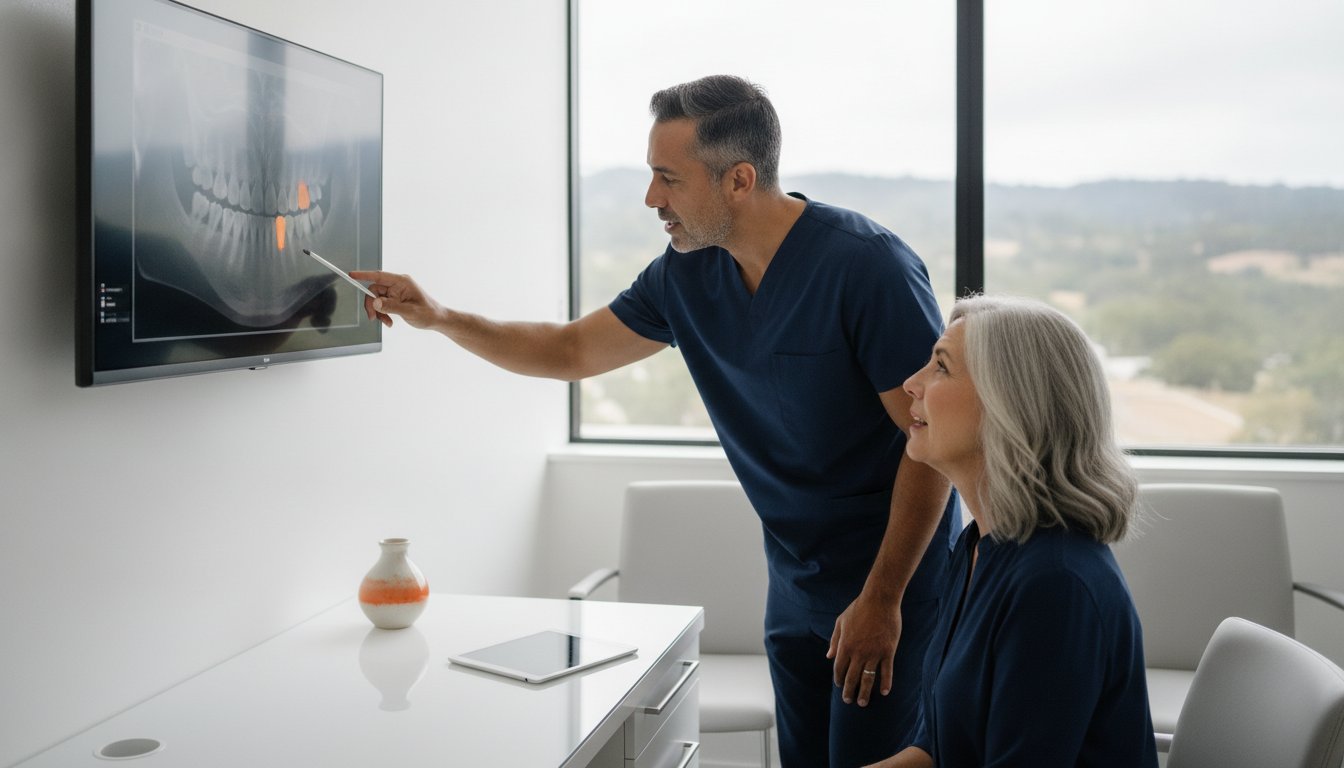
Your surgeon reviews your medical history, gums, bite, existing dentures, and jawbone. A 3D CT scan helps determine whether you have sufficient bone for implants and whether grafting, extractions, or another preparatory procedure is needed. The scan also guides precise surgical placement.
Implant Surgery
Implant placement is performed with local anesthesia, with sedation options available when appropriate. The surgery is planned around your anatomy and restoration goals. Afterward, swelling and soreness are common for a few days and are managed with specific aftercare instructions and medication when needed.
Healing and Your New Teeth
Implants typically require several months to integrate with the jawbone. You will wear a temporary denture or temporary fixed bridge during this phase, so you are not left without teeth. When healing is complete, the restorative provider connects your custom final denture or bridge.
Some full-arch cases qualify for same-day dental implants, which means you receive a temporary fixed set of teeth on the day implants are placed. Your consultation will determine whether that approach is safe for you.
Will I Need Bone Grafting?
Not necessarily. Some patients have enough bone for implant placement right away; others need a graft to restore lost width or height. In the upper back jaw, a sinus lift may create the bone height needed for implants. Full-arch techniques can also sometimes use the stronger bone that remains in the front of the jaw, avoiding extensive grafting. Only 3D planning can tell you which route is appropriate.
Cost, Insurance, and Financing
The cost of implant dentures varies based on the number of implants, the kind of final restoration, extractions, grafting needs, sedation, and other individual factors. Insurance may contribute toward some portions of treatment, but policies differ widely. Galleria provides transparent, itemized plans and can discuss financing options to help you make an informed decision. Learn more on our costs and financing page.
Frequently Asked Questions
Can I get implant dentures in a single day?
Some patients qualify for implants and a temporary fixed bridge on the same day. The implants still need months to integrate with bone before the final restoration is placed.
How many implants stop a denture from slipping?
A removable snap-in denture often uses two to four implants per arch. A fixed full-arch bridge usually needs four or more. Your anatomy and restoration design determine the exact plan.
Are implant-supported dentures painful to get?
Anesthesia keeps you comfortable during surgery. Most people experience manageable swelling and soreness afterward, and your surgical team provides instructions to support recovery.
How long do implant dentures last?
With good oral hygiene and regular professional care, implants can serve as a long-term foundation. The denture, bridge, or attachment components may need maintenance or replacement over time due to normal wear.
Get a Smile That Stays Put
You do not need to keep living around a loose denture. An implant consultation can show you whether a snap-in or fixed option can provide the comfort and stability you have been missing.
Call (916) 783-2110 or schedule a consultation at Galleria Oral & Maxillofacial Surgery.
911 Reserve Drive, Suite 150, Roseville, CA 95678.