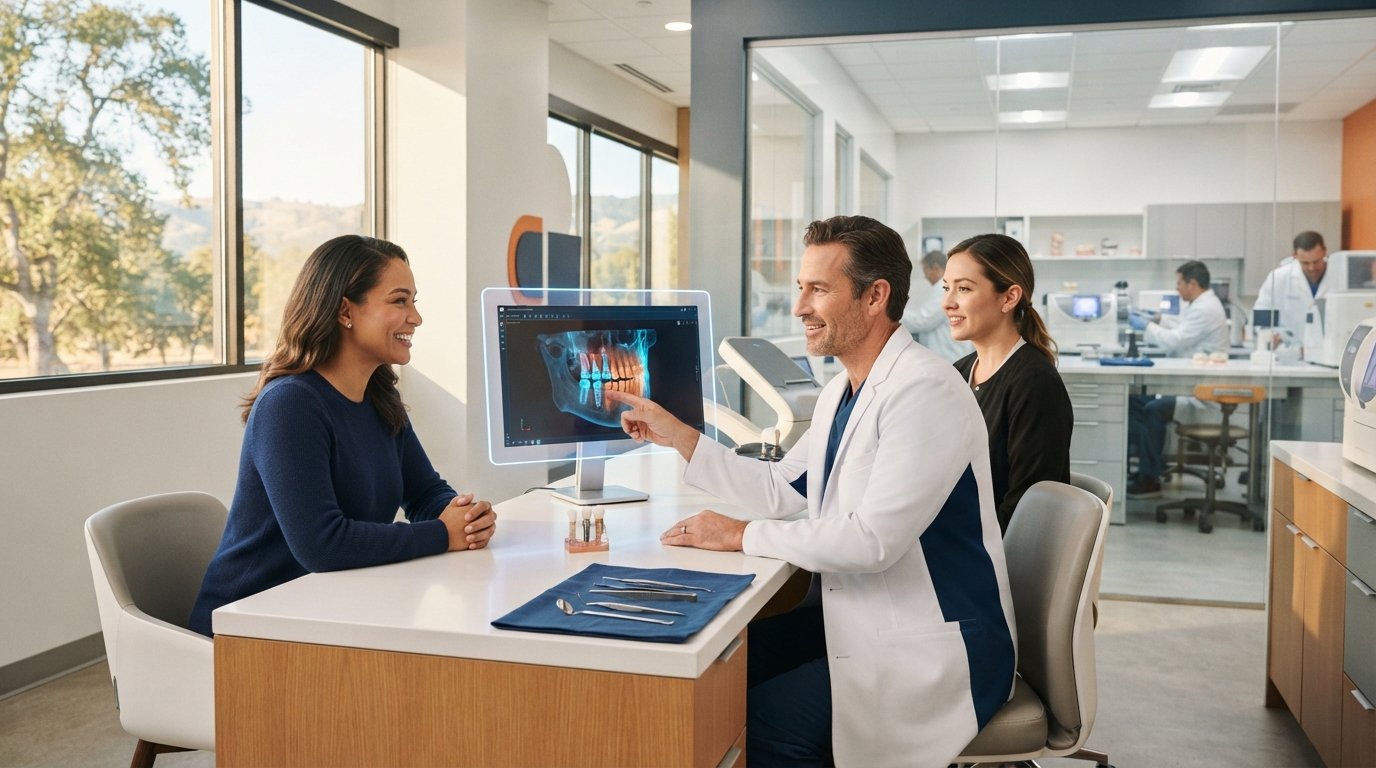
Choosing an implant surgeon is not like shopping for a replacement part. The plan must fit your jaw anatomy, health history, restorative goals, and ability to maintain the result. A well-designed consultation should leave you understanding not only where an implant might go, but also who will make the tooth, what happens while you heal, and what alternatives are reasonable.
At Galleria Oral & Maxillofacial Surgery in Roseville, we welcome patients from Rocklin, Lincoln, Loomis, Granite Bay, and surrounding communities. Use this checklist whether you are replacing one tooth, comparing full-arch plans, or seeking a second opinion. It is intended to help you ask better questions, not to rank clinicians by a single credential or piece of equipment.
Key Takeaways
- Ask who performs surgery, who creates the restoration, and how those professionals coordinate your plan.
- Training and current licensure matter, but so do case-specific planning, informed consent, and a realistic discussion of risks.
- Imaging should answer a clinical question; a scan or an in-house laboratory alone cannot promise an outcome.
- Compare written estimates by treatment stage, not by an advertised starting figure.
- Discuss follow-up and long-term cleaning before agreeing to implant treatment.
Start with the treatment team, not the advertisement
Imagine two estimates for a missing back tooth. One names only the implant placement. The other explains the surgeon's part, the restorative dentist's crown and abutment, any grafting, and the expected sequence of visits. You cannot judge the first estimate as less expensive until you know whether the scopes are the same. The same principle becomes even more important when replacing a full arch.
Oral and maxillofacial surgeons complete surgical residency training after dental school, including management of complex jaw anatomy and anesthesia. General dentists can also provide implant care, sometimes in collaboration with specialists. Instead of assuming that one title automatically settles your decision, ask what experience the clinician has with your particular anatomy and what the plan is if an implant cannot be placed as initially proposed. You can verify a California clinician's license through the state licensing search and ask about relevant specialty qualifications directly.
Five areas to compare during consultations
| Area | Ask the team | Why it matters |
|---|---|---|
| Surgical planning | What imaging is needed for my case? | Bone dimensions and nearby nerves or sinuses affect placement. |
| Restoration | Who designs and attaches my final teeth? | The visible result must be planned alongside the implant position. |
| Anesthesia | Which options fit my health history, and who monitors me? | Comfort and safety plans differ between patients. |
| Contingency | What if grafting or delayed loading is necessary? | An alternate plan prevents same-day expectations from becoming promises. |
| Maintenance | Who handles checkups, cleaning, and repairs? | Implants and prostheses require continuing professional care. |
Understand what technology can and cannot tell you
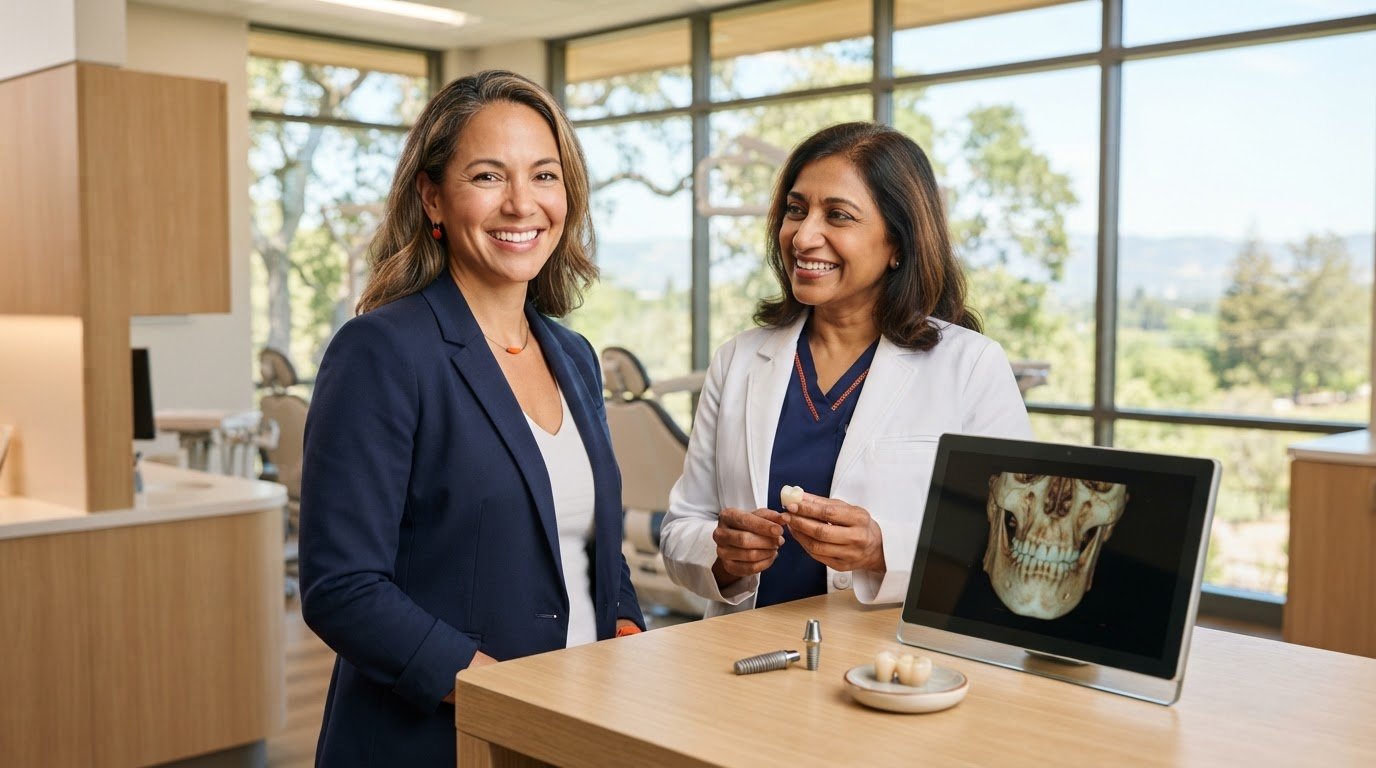
Cone-beam CT, often called CBCT, provides a three-dimensional view when clinically indicated. A surgeon can use it to inspect available bone and the relationship of a proposed implant to the nerve canal or sinus. That information may change the proposed position, reveal the need for a bone graft, or point toward a different treatment. Ask the clinician to show you what the images mean in plain language. The useful question is not “Do you own a scanner?” but “How does this scan change my plan?”
Likewise, a laboratory may be on site or elsewhere. Either arrangement can work when the surgeon, restorative dentist, and laboratory communicate effectively. Ask how they decide the position of your future crown or bridge before surgery, how fit will be checked, and who you should contact if something feels wrong. No digital workflow replaces assessment of bite, gum health, hygiene access, and your preferences.
Same-day teeth require a backup plan
If you are exploring same-day implant treatment, clarify the meaning of “teeth.” In selected cases, implants can support a provisional restoration on the day of surgery. That is not the final prosthesis, and immediate loading depends on factors such as bone quality and stability achieved during placement. A good consent conversation describes what you will wear if immediate loading is not appropriate, which foods to avoid while healing, and when the final restoration may be made.
Make written estimates genuinely comparable
Request an itemized proposal that separates diagnostics, extractions, grafting if needed, implant components, anesthesia, provisional teeth, final teeth, and follow-up. A quoted “implant” may not include an abutment or crown. For a full arch, ask whether the estimate describes one jaw or two, a removable or fixed restoration, and both provisional and final prostheses. If the plan changes after surgery, ask how any additional work will be authorized and billed.
Insurance benefits are policy-specific; obtain a benefits review or predetermination when appropriate and do not assume it guarantees payment. If financing interests you, request written terms including the total repayment amount, interest, and fees. Approval and available terms depend on the applicant and provider. Our financing information is a starting point for questions, not a substitute for reading your own agreement.
Bring a one-page checklist to the appointment
Write down your medications, medical conditions, prior jaw procedures, tobacco use, and the date of your last dental examination. Bring any current X-rays or proposed plans if you have them. Then ask three concrete questions: “What are my reasonable alternatives?”, “What might change this plan after surgery begins?”, and “Who do I call about a problem during healing?” If another office recommended extraction of multiple teeth, ask why each tooth cannot be retained and how the proposed implant plan relates to your long-term bite.
A thoughtful answer should include possible complications, such as infection, failure to integrate, nerve or sinus issues where anatomically relevant, and prosthetic maintenance. You should have room to consider a second opinion, especially before extensive irreversible treatment. Our article on implant second opinions explains what records are useful to bring.
Frequently Asked Questions
Does board certification guarantee a good implant result?
No. It is one relevant credential, not an outcome guarantee. Ask about training, experience with similar cases, planning, and how the clinician addresses complications. Your health, bone, hygiene, and restorative design also affect treatment.
Must my implant surgeon have an in-house laboratory?
No. What matters is an effective process for coordinating surgery and restoration, checking fit, making adjustments, and resolving concerns. Ask who is responsible for each step rather than assuming laboratory location predicts quality.
Can I receive final teeth on surgery day?
Same-day teeth, when appropriate, generally mean a provisional restoration. Bone integration and soft-tissue healing take additional time before the final design is completed. Not everyone is eligible for same-day loading.
What if two surgeons recommend different plans?
Ask each clinician to explain the goals, evidence from your examination and imaging, alternatives, trade-offs, and contingencies. Different reasonable approaches may exist; comparing what each proposal includes is more informative than comparing a headline fee.
How often will I need follow-up?
The schedule varies with healing and the type of restoration. Expect postoperative checks and ongoing visits with your dental team to monitor implants, gums, bite, and prosthetic components; daily home cleaning remains essential.
Educational information only, not personal medical advice or a diagnosis. Implant candidacy, anesthesia, timing, and treatment cost require an individual examination and written treatment plan.
Discuss your options in Roseville
Galleria Oral & Maxillofacial Surgery welcomes patients from Roseville and nearby communities who want to understand their implant options. Contact our Roseville office to arrange a consultation and bring your questions, records, and any estimates you would like to review.