
Searching for All-on-4 dental implants in Sacramento may lead you to many “new teeth in a day” claims. The useful clinical question is different: Can a fixed full-arch bridge be supported by implants in your particular jaw, and what happens between surgery day and your final teeth?
This is educational content, not a diagnosis, quote, or guarantee of same-day teeth. Eligibility for implant placement and immediate provisional loading depends on examination, imaging, medical factors, and stability at surgery.
Galleria Oral & Maxillofacial Surgery is in Roseville, where we serve people traveling from Sacramento and nearby communities. We do not have a Sacramento clinic. Here is a realistic framework for comparing full-arch treatment: what “All-on-4” describes, when another option deserves attention, which stages may happen on the surgical day, and why hygiene and follow-up remain essential afterward.
Key Takeaways
- All-on-4 is a configuration in which four implants are planned to support one full-arch fixed bridge; actual implant number and placement are individualized.
- Angled posterior implants may help use available bone in some cases, but severe bone loss can require a different design, grafting, or another treatment.
- If same-day attachment is appropriate, the teeth attached at surgery are usually a provisional bridge, not the final prosthesis.
- Fixed does not mean maintenance-free: cleaning under the bridge and professional monitoring protect both tissue and components.
What the Four Implants Actually Do
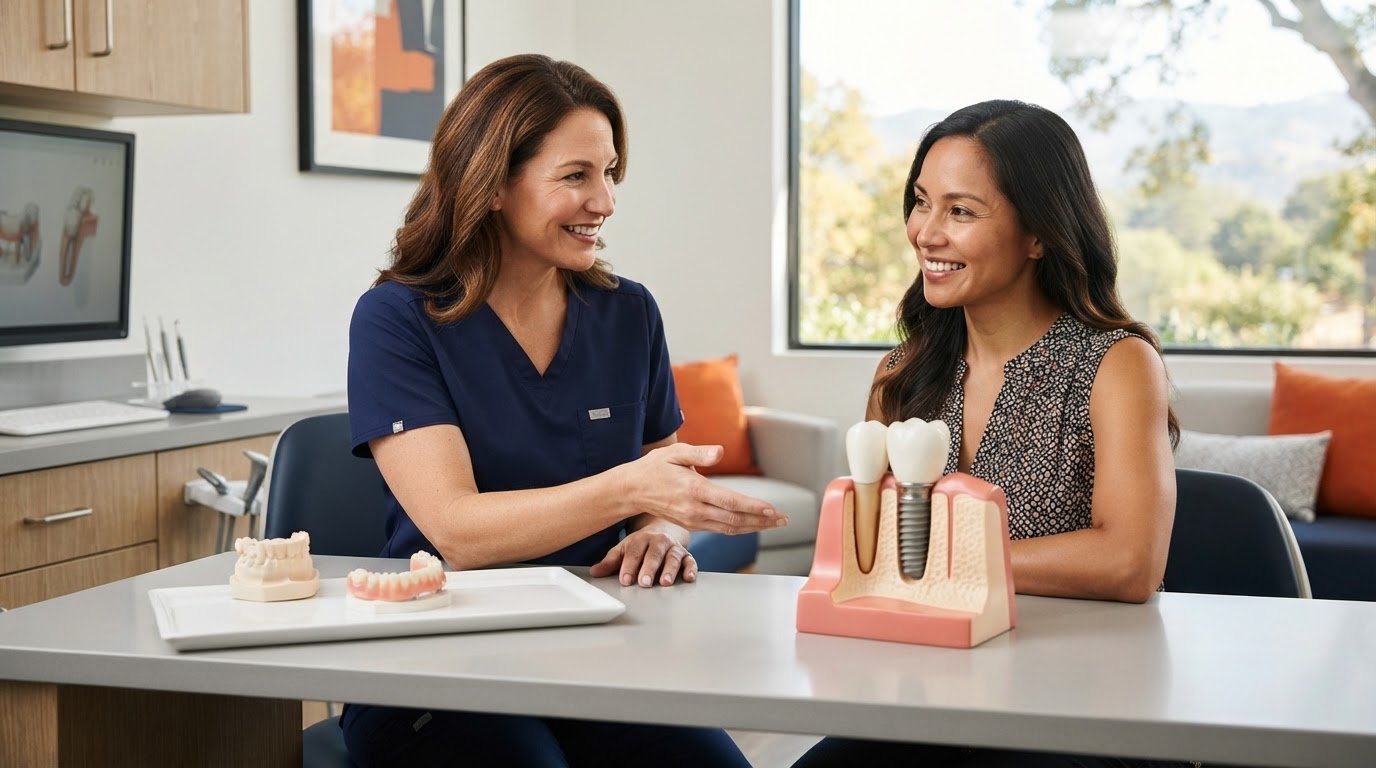
In a full-arch implant restoration, multiple implants support a prosthetic row of teeth instead of placing one implant for every missing tooth. “All-on-4” describes a common four-implant arrangement, often with back implants angled to make use of available bone and distribute support along the arch. But four is not an all-purpose target. The number and positions depend on anatomy, bite forces, the prosthetic design, and whether adequate stability can be obtained.
The bridge may be fixed to the implants, meaning you do not remove it yourself. That differs from an implant-retained “snap-in” overdenture, which you remove for cleaning. Neither category tells the whole story about chewing comfort or materials. The final design has to allow appropriate access for hygiene while meeting your bite and appearance needs. Our All-on-4 service overview introduces the procedure; a consultation determines whether it fits your case.
| Consideration | Conventional denture | Removable implant overdenture | Fixed implant bridge |
|---|---|---|---|
| Support | Rests on oral tissues | Implants retain the removable prosthesis | Implants support an attached prosthesis |
| Home cleaning | Remove and clean appliance and tissues | Remove and clean denture and attachments | Clean under bridge and around implants in place |
| Surgical component | None for denture support | Implant placement | Implant placement; extractions or grafts may be needed |
| Ongoing work | Fit adjustments, relines or repairs | Attachment servicing plus implant checks | Bridge servicing plus implant and tissue checks |
| Daily feel | Fit can change as tissues change | Removable with added retention | Not taken out by the patient |
How to Know Whether a Fixed Arch Is Feasible
Look at the entire arch, not just the missing teeth
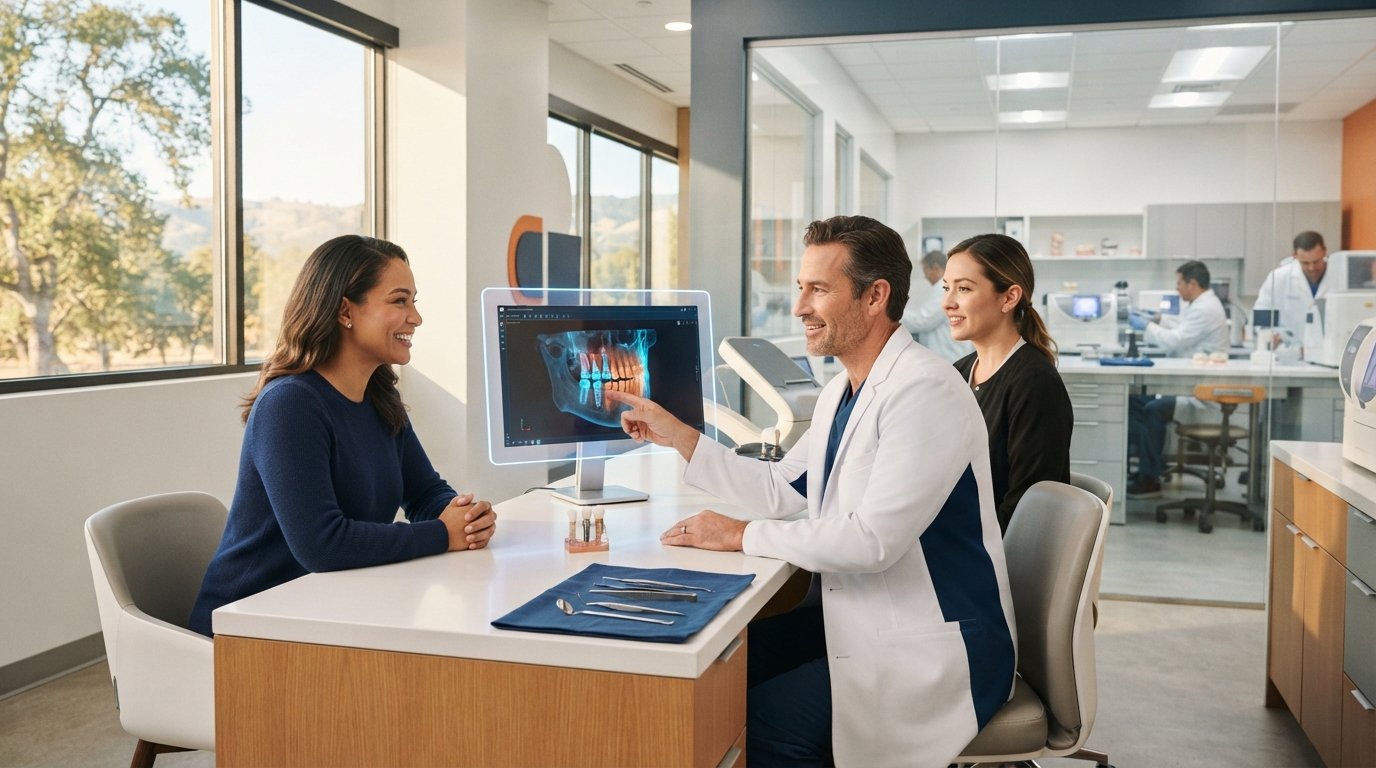
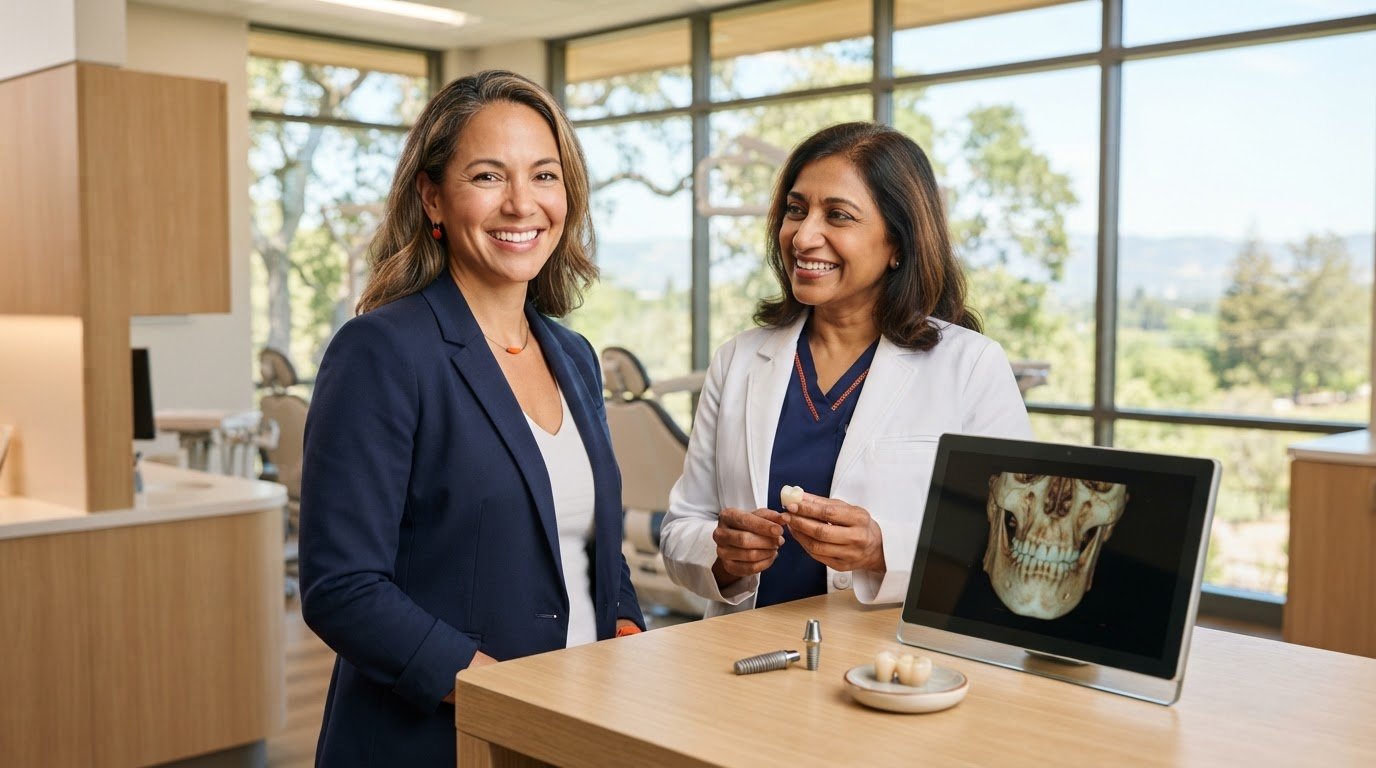
Your surgeon needs to understand where bone remains, how much room is available for the planned prosthesis, and where important anatomical structures lie. A clinical examination and imaging, which may include a cone-beam CT when indicated, help assess these issues. Existing gum infection must also be addressed. If some natural teeth could be retained, ask why extracting them would or would not serve your long-term plan.
Take bone loss seriously without assuming a dead end
Angled posterior implants can sometimes take advantage of bone that would not support a straight implant in the same position. That does not mean every patient avoids grafting. In pronounced upper-jaw bone loss, specialized alternatives such as zygomatic implants may be discussed in select cases, but they involve additional complexity and require careful evaluation; they are not automatically offered or necessary. Our bone loss guide explains why anatomy changes the plan.
Review health and healing factors
The medical review includes medication use, smoking, diabetes control, and previous treatments affecting bone or wound healing. Provide your full history even if you have worn dentures for years and expect a straightforward procedure. A well-planned alternative may be more suitable than proceeding immediately when risks are not controlled.
What Happens Before, During, and After Surgery?
Planning: The surgeon and restorative dentist discuss the desired tooth position, implant support, and any needed extractions or tissue work. Ask to see a sequence of visits and learn who fabricates the provisional and final bridge. If you travel from Sacramento to Roseville, also ask how many follow-up appointments to expect and what to do if a component feels loose.
Surgical appointment: After the appropriate anesthesia plan is established, indicated teeth may be removed and implants placed. The team checks the stability of the implants. If the planned immediate-load criteria are met, a fixed provisional bridge may be attached that day. If stability or other conditions do not support that approach, an alternate temporary solution and staged healing plan may be safer. No preoperative promise can override what is found clinically.
Healing: Even with a fixed provisional, implants still need time to integrate with bone. The temporary restoration must be protected from excessive chewing forces. Follow the individualized food instructions, avoid tobacco, and keep all review visits. For concrete meal-planning ideas, see what to eat after All-on-4 surgery. Call the surgical team about increasing pain, fever, persistent bleeding, or movement of a component.
Final restoration and care: When healing and integration have been assessed, the restorative team can proceed with the final bridge. Material selection, bite adjustments, and maintenance instructions are specific to the case. A fixed bridge may need professional servicing or repair over time. Clean underneath it as directed and attend periodic implant and tissue examinations.
How to Compare a Full-Arch Treatment Proposal
Ask whether the written proposal includes extraction, imaging, grafting if needed, anesthesia, provisional teeth, the final prosthesis, follow-up, and possible repairs. Clarify which steps are conditional. A quote for implant surgery alone cannot be fairly compared with a quote for completed prosthetic care. Coverage depends on your particular insurance contract; financing, where available, is subject to approval and written terms. Our financing page can help you prepare questions.
Frequently Asked Questions
Will I definitely leave with fixed teeth on surgery day?
No. A same-day fixed provisional depends on the preoperative plan and the stability achieved at placement, among other factors. Your team should discuss an alternate temporary plan in case immediate loading is not advisable.
Are the same-day teeth the final bridge?
Usually not. A provisional supports appearance and limited function during healing; the definitive bridge is planned after integration and tissue changes are assessed. You may need adjustments along the way.
Does All-on-4 always eliminate bone grafting?
No. Angled implants can sometimes use available bone more effectively, but grafting or a different treatment design may still be needed. Imaging and examination determine the options.
What if I already have gum disease?
Active disease requires evaluation and management as part of planning. Removing compromised teeth does not eliminate the need for healthy tissues and careful cleaning around the future implants.
How do I clean a fixed full-arch bridge?
The exact tools depend on the bridge design, but cleaning beneath the prosthesis and around implants is essential. Your team may recommend specialized floss or brushes and periodic professional visits. Fixed does not mean self-cleaning.
Plan Full-Arch Care at Our Roseville Office
If you live in Sacramento or another nearby city and want to explore a fixed arch, Galleria Oral & Maxillofacial Surgery welcomes you to our Roseville practice. Request a consultation to discuss anatomy, health history, provisional options, and long-term maintenance with a team that can coordinate your surgical plan with restorative care.